Please don't hesitate to reach out to us whenever you need assistanco. Well make sure to respond to you promptly.
 lyang_huang@gadetin.com.cn
gadetin@gadetin.com.cn
 +86 136 7623 8313
 +86 153 3806 1804
 09:00 - 18:00
 No.2 Zhenglong 1st street, Dawang National Hi-tech Developmet Zone, Zhaoqing City, Guangdong, China

Private label cosmetics compliance is not one rule but three regimes that rarely overlap. The EU requires a PIF dossier and a Responsible Person before sale; the US relies on MoCRA facility registration and product listing with no pre-approval; Halal is a certification that bans certain ingredients and sourcing. Pick the path by where you sell — and design one formula to the strictest regime so the others follow.
Below is the side-by-side, with the real timelines and the dossier contents. For timing impact see why launches miss their window; for vetting a partner who can build these files, see our 12 manufacturer questions.

1. The EU: PIF + CPNP + Responsible Person
2. What Actually Goes Inside the PIF Dossier
3. CPNP Notification and the Responsible Person
4. The US: MoCRA, Not Pre-Approval
5. Halal: Certification, Not a Government Filing
6. Side-by-Side Comparison
7. Timelines and Cost: How Long Each Really Takes
8. Which Path Fits Your Market
9. Can One Formula Serve All Three?
10. Documentation Checklist Before You Brief the Factory
11. Common Mistakes
12. Frequently Asked Questions
The EU (and the UK, which runs its own UK Responsible Person rules) treats the Product Information File as the legal core. It must exist before you place a product on the market. It holds the formula, the Cosmetic Product Safety Report, manufacturing and GMP details, proof of effect and labeling. You also file through CPNP and name a Responsible Person (EU/UK-established) who can be your importer or a hired agent. No PIF and no Responsible Person means no legal sale — full stop.
The PIF is not one document but a folder. Core parts:
· Formula and specification — full INCI list with percentages and the function of every raw material.
· Cosmetic Product Safety Report (CPSR) — the signed assessment by a qualified EU safety assessor. This is usually the longest lead item.
· Method of manufacture and GMP — your factory's process and ISO 22716 / GMPC evidence.
· Proof of effect — for claims like "anti-aging" you need supporting data, not just a sentence.
· Animal-testing declaration — EU law bans animal-tested cosmetics; you must declare compliance.
· Labeling and packaging copies — exactly as sold.
Build this in parallel with production; starting it after fill is the classic EU launch killer.
CPNP (Cosmetic Products Notification Portal) is the EU's online register. You upload product data and the PIF reference before sale; authorities and poison centers can query it. The Responsible Person must be established in the EU/UK and is legally liable for the product. Options: use your importer, or hire a specialist RP consultant. A named RP also forces someone to actually own the file — which is why we recommend vetting this early (see our 12 manufacturer questions).
The US FDA does not approve cosmetics before sale. Under MoCRA (the 2022 law) you must: register the facility, list each product (with ingredients and a US contact), keep records accessible to FDA, and run an adverse-event system. Labeling now needs INCI ingredients, a US address or phone for adverse events, and — for products with regulated colors or professional-use items — extra handling. There is no EU-style PIF, but FDA can issue Warning Letters and recall pressure, so clean records matter. Plan MoCRA alongside, not after, production.
Halal is issued by recognized bodies — JAKIM (Malaysia), MUIS (Singapore), IFANCA and Halal GSO among them. It bars alcohol as solvent in many schemes, pork-derived and some animal-derived inputs (certain glycerin, gelatin, some emulsifiers), and requires documented, audited sourcing. The audit checks materials, the line (no cross-contamination) and records, then grants a certificate valid 1–2 years with annual renewal. It is the market-access key for GCC, Southeast Asia and parts of Africa — but it does not replace EU or US law; you still need those where you sell.
Dimension | EU | US (MoCRA) | Halal |
Pre-sale approval | No, but PIF + RP required | No | No (cert required) |
Core file | PIF dossier + CPSR | Facility + product listing | Halal certificate |
Responsible party | EU/UK Responsible Person | US agent (listing) | Certified body |
Ingredient bans | Annex II/III restricted | Limited (MoCRA) | Alcohol, pork/animal-derived |
Lead time | High (dossier + CPSR) | Low–mid | Mid (audit) |
Renewal | Keep updated | Keep updated | 1–2 yrs, annual audit |
Market | EU/UK | US | GCC, SEA, Africa |
· EU PIF: typically 2–4 months, dominated by the CPSR (safety assessor queue + data). Budget this as your critical path.
· US MoCRA: days to a few weeks for registration and listing if records are ready; the work is in keeping data clean.
· Halal: 4–8 weeks for audit and certificate, plus annual renewal effort.
· Cost: PIF build and CPSR are the biggest line items; Halal audit is moderate; MoCRA is light. A China OEM/ODM that prepares these files for you removes most of the surprise.
· Selling EU/UK → start the PIF and name an RP at brief stage; it is your longest lead item.
· Selling US → register and list; faster, but keep records and labels compliant.
· Selling Muslim-majority markets → layer Halal certification on top of local law.
· Selling all three → design to the strictest (EU PIF + Halal input rules) and the US listing follows.
Often yes, if you avoid EU-banned actives and Halal-restricted inputs and document sourcing from the start. The PIF and CPSR sit beside the Halal certificate; MoCRA listing is light. Design once to the strictest regime and the others follow — this is exactly why briefing the factory early saves rework.
· Target markets and their regimes (EU/UK, US, Halal) pinned down.
· Claim list — which need proof (anti-aging, SPF) vs basic.
· Ingredient watchlist — banned or restricted under any target regime.
· Responsible Person / US agent decided.
· Halal body chosen if needed (JAKIM, MUIS, IFANCA…).
· MOQ and packaging decided (standard first to protect timeline).
Hand this to the factory so the dossier and the product are built together, not in sequence.
· Starting the PIF after production (freezes the EU launch for months).
· Assuming Halal replaces EU/US law (it never does).
· Letting the factory "handle it" with no contract (ownership gap — see manufacturer questions).
· Treating MoCRA as optional (records and listing are mandatory; FDA can act).
No. Under MoCRA you register the facility and list the product; there is no pre-sale approval like the EU PIF model. FDA acts after the fact via records and Warning Letters.
No. Halal is market access for Muslim-majority regions; the EU still requires a PIF, CPNP filing and a Responsible Person regardless of Halal status.
The EU, because the PIF dossier and the signed CPSR must exist before sale. Start it in parallel with production, not after.
Yes, for the EU/UK. The RP must be established in the market, so a China-based plant cannot be your RP — use your importer or a hired RP consultant.
The Cosmetic Product Safety Report: the assessor's signed conclusion that the product is safe. Only a qualified EU safety assessor (pharmacy/toxicology training plus cosmetics scope) may sign it — a factory cannot.
Generally yes, each distinct product (including shade or variant) is listed separately, with its ingredients. Plan your SKU count before listing to avoid rework.
Usually 1–2 years depending on the body, with an annual audit to renew. Keep the renewal date in your launch calendar so access does not lapse.
A full-service OEM/ODM can assemble the dossier and arrange the CPSR and RP, but the safety assessor and RP are third parties — confirm who holds the files and the liability in writing. See our 12 manufacturer questions.
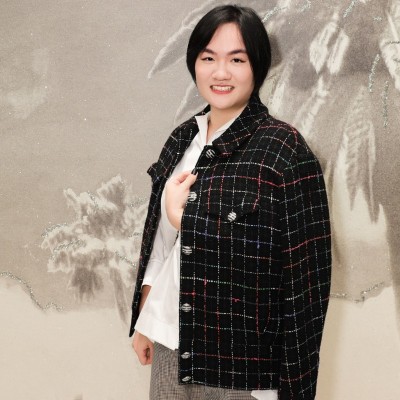
With over 10 years of experience in the beauty and personal care industry, Ying Hong has supported 200+ brands and 6,000+ product developments. Her expertise spans custom formulation, regulatory compliance, and OEM/ODM manufacturing. She shares practical insights to help beauty brands navigate product development and manufacturing.

 English
 Français
 Русский язык
 español


