Please don't hesitate to reach out to us whenever you need assistanco. Well make sure to respond to you promptly.
 lyang_huang@gadetin.com.cn
gadetin@gadetin.com.cn
 +86 136 7623 8313
 +86 153 3806 1804
 09:00 - 18:00
 No.2 Zhenglong 1st street, Dawang National Hi-tech Developmet Zone, Zhaoqing City, Guangdong, China

Choosing the right body care manufacturer requires more than comparing product catalogs and unit prices. Body wash, lotion, cream, scrub and other body care products have different formulation, sensory, packaging and production requirements, so brands need a supplier that can support the complete product-development process rather than simply provide finished formulas.
A suitable body care manufacturer should combine relevant formulation experience, flexible OEM or private label options, reliable production control, packaging coordination and clear project communication.
For a startup, that may mean choosing mature private label products that can reach the market efficiently. For an established beauty brand, it may mean finding a development partner capable of creating customized textures, fragrances, product concepts and coordinated body care collections.
This guide explains what B2B buyers should evaluate before selecting a manufacturer for body wash, lotion and related products.
The first step is not requesting quotations.
It is defining the project.
A supplier cannot recommend the right development path if the brand has not yet decided what it wants to sell.
Before contacting manufacturers, clarify:
Target consumer
Product category
Core customer need
Market positioning
Intended price segment
Preferred texture
Fragrance direction
Packaging concept
Target market
Required customization level
For example, a lightweight daily body lotion requires a different development approach from a rich body cream positioned around intensive moisturization.
Similarly, a refreshing shower gel and a creamy moisturizing body wash may share the same broad category but provide very different consumer experiences.
Brands still defining their product range can first review GADETIN's body care product solutions to map possible category directions.
A body care manufacturer may support several product types, but that does not mean every supplier has equal experience across all categories.
Typical body care projects may include:
| Product Category | Main Development Focus |
|---|---|
| Body Wash | Cleansing, foam, skin feel, fragrance |
| Shower Gel | Cleansing experience, texture, fragrance, appearance |
| Body Lotion | Spreadability, absorption, moisturization, after-feel |
| Body Cream | Richness, texture, sensory positioning |
| Body Scrub | Exfoliation level, particle suspension, rinse feel |
| Body Butter | Dense texture, emollient feel, premium positioning |
| Hand & Body Care | Convenience, daily use, fast absorption |
| Specialized Body Care | Targeted product concept and custom formulation |
A supplier should understand how the formulation priorities change from one format to another.
A good body wash manufacturer, for example, should be able to discuss cleansing and foam without treating them as the only performance criteria.
A lotion supplier should be able to discuss spreadability, absorption and post-application feel—not simply whether the formula moisturizes.
The right cooperation model depends on how much differentiation your brand needs.
| Model | Development Approach | Suitable For |
|---|---|---|
| Ready Private Label | Existing formula with branding and packaging | Faster market entry |
| Modified Private Label | Existing formula with selected changes | Moderate differentiation |
| Custom Formulation | Formula developed around a defined brief | Stronger differentiation |
| OEM to Brand Specification | Manufacturing according to agreed requirements | Brands with defined technical needs |
Private label can be suitable when:
Speed to market matters
The brand is testing a new category
Formula differentiation is not the primary selling point
Marketing and packaging drive most of the brand identity
The company prefers to start with established product solutions
Custom development is more appropriate when:
Texture is central to the product concept
Fragrance experience is part of the brand identity
The brand has ingredient preferences
A specific skin-feel profile is required
The product needs stronger differentiation from standard market offerings
The goal is not to choose the most complex manufacturing model, but the one that supports your commercial strategy.
Body care products are highly sensory.
Consumers immediately notice:
Foam
Thickness
Spreadability
Fragrance
Rinse feel
Absorption
Stickiness
Richness
Residue
Skin feel after use
That means formulation capability matters even for products that appear relatively simple.
Ask how the manufacturer approaches:
Cleansing level
Foam density
Rinse behavior
Skin feel
Fragrance
Viscosity
Appearance
A high-foam product is not automatically a better body wash.
The formula should match the customer and brand position.
Development may focus more on:
Spreadability
Absorption
Richness
Tackiness
After-feel
Fragrance retention
Packaging compatibility
A premium body cream may intentionally feel rich and substantial, while a daily lotion may need a lighter, faster-absorbing profile.
The manufacturer should be able to translate consumer language such as “light,” “rich,” “silky” or “refreshing” into practical formulation targets.
The word “custom” can mean very different things between suppliers.
Before beginning development, confirm the real customization scope.
Possible areas include:
Cleansing profile
Moisturizing feel
Texture
Fragrance
Appearance
Ingredient preferences
Daily care
Moisturizing
Premium body care
Refreshing cleansing
Sensitive-skin positioning
Targeted body care
Bottle type
Pump format
Tube
Jar
Closure
Label
Outer packaging
Ask manufacturers to distinguish between:
Existing formula customization
Formula modification
Fully custom development
This prevents mismatched expectations later.
Sampling is a critical part of a custom body care project.
A structured sample process normally begins with a clear product brief.
The brand should provide:
Target product
Intended user
Texture preference
Fragrance direction
Product positioning
Packaging concept
Reference products where relevant
The first sample gives the brand something concrete to evaluate.
Viscosity
Foam
Cleansing feel
Rinse
Fragrance
Skin after-feel
Spread
Absorption
Slip
Richness
Residue
Fragrance
Feedback should be specific.
Instead of:
Make the lotion feel more premium.
Say:
We want slightly more cushion during application, less tackiness after absorption and a softer fragrance.
That allows the R&D team to make targeted adjustments.
Fragrance can play a particularly important role in body care.
For many customers, shower gel, body wash and lotion are experiential products.
The fragrance affects how the product is perceived during and after use.
Brands should consider:
Fragrance family
Intensity
Product positioning
Compatibility with formula
Consistency across the product line
If you plan to launch a body wash and lotion as a set, a coordinated fragrance strategy can create a stronger product-system identity.
Fragrance should therefore be discussed during development, not treated as a final decorative choice.
Packaging is both a branding element and a technical consideration.
Different formulas behave differently in different dispensing systems.
Examples:
| Product | Common Packaging Considerations |
|---|---|
| Body Wash | Pump, flip-top, squeeze bottle |
| Shower Gel | Bottle design and dispensing control |
| Lotion | Pump or squeeze format |
| Body Cream | Jar or tube |
| Scrub | Jar opening and product access |
| Travel Products | Smaller bottles or tubes |
A very thick lotion may not dispense well through a pump designed for a thinner product.
A scrub requires different packaging considerations from a shower gel.
Formula and packaging should be evaluated together before commercial production begins.
GADETIN's body care manufacturing range can be used as the relevant internal product reference when planning a body care project.
A successful laboratory sample is not the end of product development.
The formula eventually needs to be reproduced at commercial scale.
Before selecting a manufacturer, ask:
How is the approved sample documented?
How is it transferred into production?
How are critical product characteristics controlled?
How are differences between laboratory and production conditions managed?
How is the final production specification confirmed?
Large-scale manufacturing involves different equipment and process conditions from sample preparation.
The supplier therefore needs to understand both formulation and production.
A strong OEM partner does not only create an attractive sample; it must also reproduce the approved product consistently during commercial manufacturing.
Quality control is not a single final inspection.
A professional manufacturing process should control quality at several stages.
| Stage | Buyer Should Understand |
|---|---|
| Incoming Materials | How raw materials and packaging are managed |
| Bulk Production | How production requirements are controlled |
| Filling | How fill consistency and containers are handled |
| Packaging | How closures, labels and appearance are checked |
| Finished Product | How the final specification is reviewed |
| Batch Management | How production information is documented |
The exact process varies by manufacturer and project.
The key issue is transparency.
A buyer should understand how the manufacturer moves from an approved specification to repeatable batches.
Unit cost matters, especially in competitive retail markets.
But a quotation alone does not tell you whether the supplier can execute the project efficiently.
Compare suppliers across the complete project.
| Factor | What to Evaluate |
|---|---|
| Category Experience | Body wash, lotion and related body care knowledge |
| Formula Capability | Private label, modification or custom formulation |
| Sampling | Structured development and feedback process |
| Packaging | Formula-container compatibility support |
| Manufacturing | Commercial scale-up and production control |
| Quality | Clear quality-management procedures |
| Communication | Specific and responsive project support |
| Expansion | Ability to support future product categories |
A lower initial quotation may become less attractive if development support, packaging coordination or communication is weak.
Good suppliers ask questions.
If a manufacturer immediately says “yes” to every request without asking about the target customer or product positioning, that should prompt further investigation.
Useful supplier questions may include:
Who is the product for?
Where will it be sold?
What texture do you want?
What fragrance direction do you prefer?
Is this private label or custom development?
What packaging are you considering?
Are you developing a single product or a collection?
These questions show whether the supplier is treating the inquiry as a product-development project rather than simply a transaction.
Your initial project may be one body wash.
But if it performs well, you may later add:
Matching body lotion
Body cream
Body scrub
Hand care
Travel-size formats
Seasonal fragrance variations
A manufacturer capable of supporting a broader body care portfolio can reduce the need to restart sourcing for each new SKU.
It can also help maintain consistency across:
Fragrance
Packaging
formula positioning
product quality
supplier communication
Brands planning a larger body care range can review GADETIN's body care product category when structuring future extensions.
A large catalog does not automatically mean strong development capability.
Understand what the supplier can actually customize.
Texture is important, but also evaluate absorption, residue, packaging and customer use.
Fragrance may drive purchase appeal, but cleansing experience, foam and after-feel still matter.
Packaging affects dispensing, filling and customer experience.
Start packaging discussions early.
Repeated strategic changes make formulation development inefficient.
Agree on positioning before beginning detailed revisions.
Confirm what is included:
formula
sampling
packaging
customization
production
quality support
Two quotations may represent very different service levels.
Before selecting a body care products supplier, use a standardized checklist.
Does the manufacturer understand your required category?
Can it support body wash, lotion or related extensions?
Is the customization scope clear?
Is there a defined sample process?
Can technical requirements be explained clearly?
Can the formula be adjusted according to brand feedback?
How does sample approval move into production?
How are specifications documented?
Is packaging coordinated with manufacturing?
Are quality procedures explained?
Are production and finished-product requirements controlled?
Is communication responsive?
Are next steps clear?
Can the supplier support future product expansion?
Private label body care may be appropriate when:
You need to launch efficiently
You are testing a market
You want to reduce initial development complexity
Your differentiation is primarily branding and packaging
You are building a first product collection
Custom formulation may make more sense when:
Sensory differentiation is central to the brand
You need a specific texture or skin feel
Fragrance is part of a distinctive product concept
You have ingredient preferences
You are building a long-term signature body care range
There is no universal answer.
The decision should reflect the brand's commercial stage, development resources and positioning.
GADETIN provides body care manufacturing support for brands developing private label and customized personal care products.
For buyers evaluating body wash, lotion or broader body care programs, the GADETIN Body Care category provides the most relevant starting point.
Brands planning a larger multi-category beauty portfolio can also explore the GADETIN manufacturing platform to understand the wider product and OEM service structure.
Choosing a body care manufacturer is ultimately about finding a supplier whose development and production system fits your brand strategy.
For B2B buyers, the most important factors include:
Product-category experience
Private label and custom formulation options
Sensory development capability
Sample and revision process
Fragrance development
Packaging compatibility
Commercial scale-up
Quality management
Communication
Future category expansion
The right body care manufacturer should be able to take a clear commercial brief and turn it into a product that can be formulated, packaged and manufactured consistently.
Define your target customer and product experience first. Then evaluate suppliers against those requirements instead of starting with the cheapest quotation.
That produces a much stronger foundation for long-term body care sourcing.
Look for relevant category experience, formulation capability, private label or OEM options, sampling procedures, packaging support, production control, quality management and clear project communication.
Evaluate how the manufacturer handles cleansing performance, foam, fragrance, texture, skin feel, packaging and production consistency. Do not choose only by formula price.
Many manufacturers support multiple body care categories. Using one manufacturer for a coordinated body wash and lotion range can simplify fragrance, packaging and product-line development.
Private label usually begins with existing product solutions and focuses on branding or selected customization. Custom formulation involves deeper development around a specific product brief.
Provide your target customer, product positioning, preferred texture, desired absorption and after-feel, fragrance direction, packaging idea, target market and customization requirements.
Review formulation experience, sample quality, texture customization, packaging compatibility, production controls, quality procedures and ability to communicate technical decisions clearly.
Packaging should be discussed during formulation development. Product viscosity, dispensing and container format need to work together, especially for lotion, cream and scrub products.
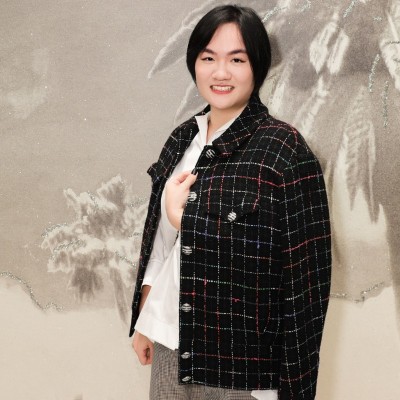
With over 10 years of experience in the beauty and personal care industry, Ying Hong has supported 200+ brands and 6,000+ product developments. Her expertise spans custom formulation, regulatory compliance, and OEM/ODM manufacturing. She shares practical insights to help beauty brands navigate product development and manufacturing.

 English
 Français
 Русский язык
 español


