
 lyang_huang@gadetin.com.cn
gadetin@gadetin.com.cn
 +86 136 7623 8313
 +86 153 3806 1804
 09:00 - 18:00
 No.2 Zhenglong 1st street, Dawang National Hi-tech Developmet Zone, Zhaoqing City, Guangdong, China

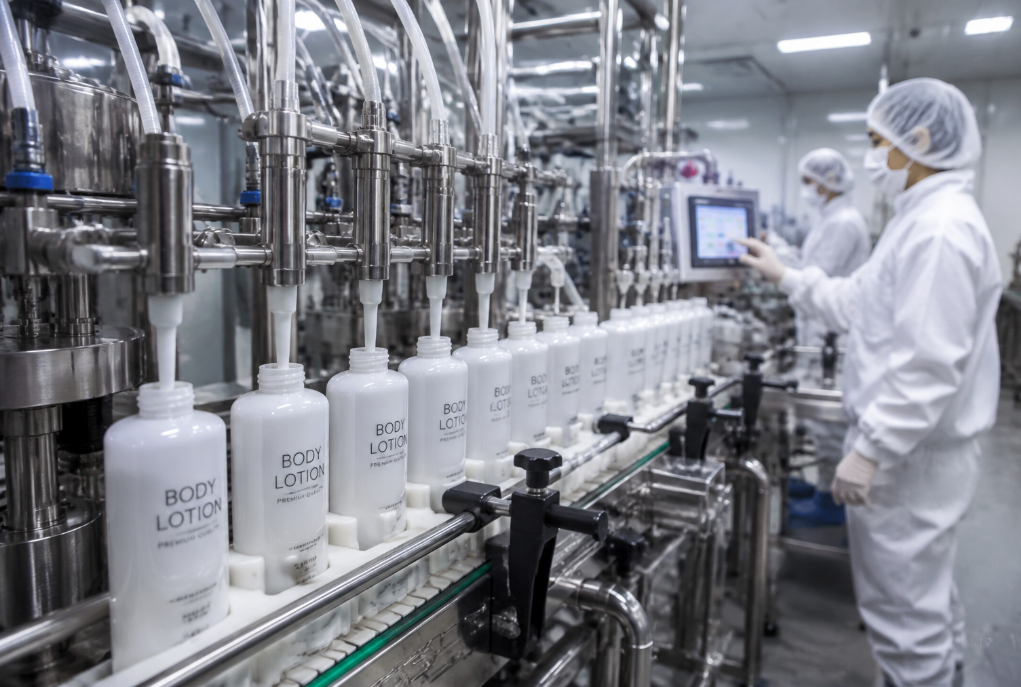
Searching for how to start a skincare brand usually means you have already decided to build one. The next challenge is figuring out how to turn an idea into a product that customers will buy, that can be manufactured consistently, and that can grow without creating unnecessary financial or regulatory risks. Many startup guides cover branding, product development, and marketing as separate steps. However, manufacturing decisions often determine your product positioning, pricing structure, packaging options, and compliance requirements long before your first product reaches the market.
This guide covers the complete process of starting a skincare brand, from defining your concept and selecting your first products to choosing a manufacturing model, developing formulas, designing packaging, meeting regulatory requirements, calculating costs, launching, and scaling. Each stage is connected to the decisions that influence the next one. Understanding these connections early can help you avoid expensive changes after production has begun.
Gadeting Group approaches skincare development from the manufacturing side. With a stated 31-year manufacturing history, more than 10,000 ready-to-launch formulas, and experience working with over 1,000 brands, the company brings a production-oriented perspective to product development. Its stated experience also includes supplying retailers such as Walmart, Watsons, and AEON, alongside manufacturing and social-compliance credentials including FDA-related requirements, ISO 22716, GMPC, and BSCI. Specific certifications, registrations, scopes, and supplier qualifications should always be verified against current documentation and the relevant facility.
The most important decisions are not limited to what product to sell. You also need to understand the three main manufacturing paths, who owns your formula, when regulatory compliance should enter the process, how inventory affects cash flow, how retail deductions affect actual revenue, and whether your product can be manufactured consistently at a larger scale. Finally, building a skincare brand requires a sustainable operating model for the founder, not simply a product that works in a laboratory. The following nine steps connect these decisions into a practical development process.
1. Define Your Brand Concept and Target Audience
Before choosing a formula or contacting a manufacturer, define what your skincare brand stands for and whom it will serve. A clear concept helps guide product selection, ingredient choices, packaging, pricing, and marketing. Without it, new brands can end up with products that appeal to several different audiences without giving any one audience a compelling reason to buy.
Define Your Brand Vision and Mission
Your vision describes what you want the brand to become. Your mission explains what it does for customers and how it delivers that value. For example, a brand might aim to make straightforward skincare accessible to people with sensitive skin, or develop targeted products for customers who want a simpler routine.
Keep these statements practical. They should help you make decisions about your products, rather than exist only as wording on your website. If a proposed product does not serve your target customer or reinforce your positioning, reconsider whether it belongs in your initial range.
Build a Specific Target Customer Profile
Describe your target customer in terms that influence product and business decisions:
Age and life stage: Consider whether your audience consists of younger consumers building their first routine, established skincare buyers, or customers with more specialized needs.
Skin type and concerns: Identify relevant characteristics such as dry, oily, combination, or sensitive skin, while avoiding unsupported medical claims.
Usage occasion: Determine whether your products are intended for everyday routines, travel, professional treatments, or a particular step in a skincare regimen.
Price sensitivity: Understand the price range your customers consider reasonable and what they expect at that price.
Purchase behavior: Consider whether customers discover products through social media, professional recommendations, online marketplaces, or physical retail.
Choose a Meaningful Niche
A broad label such as natural or organic does not automatically create a differentiated niche. These terms describe characteristics or positioning, but they do not necessarily identify a specific customer problem or an underserved market.
A stronger niche connects a defined audience with a clear product proposition. You might focus on simplified routines for busy consumers, fragrance-free products for customers who prefer to avoid fragrance, or a specific skincare step within an accessible price range. Any natural, organic, sensitive-skin, or performance-related claims must be supported by the relevant evidence and comply with applicable requirements.
If you are considering an organic or natural positioning, verify what the term means in your target market. Organic certification requirements vary by jurisdiction, and the use of terms such as "organic" or "natural" may be regulated. A brand that claims organic positioning without the supporting certification or documentation risks regulatory action and consumer distrust. The positioning should be supported by the actual formulation, sourcing, and documentation—not only by marketing language.
Analyze Competitors and Validate the Concept
Review competing brands, their product ranges, ingredient positioning, packaging, prices, customer reviews, and distribution channels. Look for repeated complaints, underserved needs, and gaps between what customers want and what current products offer.
Market context matters before you commit. The global natural and organic skincare market was valued at approximately $11.5 billion and is projected to reach $23.6 billion by 2030, growing at a compound annual growth rate of around 9.4%. The broader skincare market is also expanding, driven by increased consumer attention to ingredient transparency, routine simplification, and product efficacy. This does not mean every new brand will succeed, but it does mean the category is not shrinking. The relevant question is not "is there room?" but "does this concept have a specific reason to exist within that room?"
Concept validation should not depend entirely on personal preference. If you have access to a library of more than 10,000 ready-to-launch formulas across nine product categories, review its category distribution and relevant development experience to understand which product types have precedents. Data from previous brand projects can help you identify possible directions, but it should not be treated as proof of current market demand unless supported by relevant sales or consumer research.
Regulatory feasibility should also enter the process at this stage. Certain ingredients, product claims, intended uses, and markets can create additional requirements. Before committing to a concept, establish whether its proposed claims and formulation are feasible in your intended markets.
2. Choose Your Starting Products: Fewer, Focused, and Validated
Launching with a large product range may appear to make a brand more complete, but it also multiplies formulation work, packaging decisions, minimum order quantities, inventory commitments, testing requirements, and marketing costs. For many new skincare brands, starting with one to three core products is a more manageable approach.
Start with One to Three Core Products
Choose a small group of products that serve a coherent purpose. They might address the same customer concern or work together within a simple routine. A focused range makes it easier to explain your brand, test customer demand, and understand which products deserve further investment.
Consider designating one product as your star product. This is the product you want customers to associate most strongly with the brand. It should have a clear value proposition, fit your target customer's needs, and be practical to manufacture, package, price, and promote.
Compare Product Categories Before Committing
Different skincare products have different formulation, manufacturing, packaging, and compliance considerations. A face cream, serum, and cleanser should not be assumed to have identical development requirements.
| Decision factor | What to evaluate |
|---|---|
| Formulation complexity | Ingredient compatibility, processing requirements, stability, and preservation needs. |
| Minimum order quantity | Formula, filling, container, decoration, and packaging-component order requirements. |
| Compliance | Ingredient restrictions, product classification, intended claims, testing, and market-specific obligations. |
| Production lead time | Formula readiness, testing, component sourcing, manufacturing scheduling, and quality release. |
| Market competition | Existing alternatives, price positioning, customer demand, and opportunities for meaningful differentiation. |
| Packaging compatibility | Formula-container compatibility, dispensing performance, protection, appearance, and component availability. |
Use this framework to compare candidate products rather than relying on assumptions about which category is easiest or most profitable. The actual requirements depend on the formula, packaging, target market, production process, and manufacturer.
Start Small, but Start with a Validated Option
Starting small reduces the amount of capital committed before you understand customer demand. Starting with a validated option can reduce some development uncertainty as well. Existing formulas may offer a faster route than developing every formulation from scratch, provided the formula fits your positioning and has appropriate supporting documentation.
A ready-to-launch formula is not automatically suitable for every brand or market. Confirm its ingredient list, available test data, customization limits, compatibility with your packaging, and the claims you intend to make. The objective is to select a product with a credible path to market, not merely the shortest development timeline. A later section describes how one established brand used a validated formula as the starting point for a staged launch—and how that decision affected both cost and market risk.
3. The 3 Manufacturing Paths: Custom Formulation, Private Label, and Brand Distribution
Your manufacturing model affects product differentiation, development time, initial investment, formula rights, and your ability to change suppliers later. Three common paths are custom formulation, private label, and brand distribution. They serve different business models, and the right choice depends on what you need to own, control, and build.
Path 1: Custom Formulation
Custom formulation involves developing a formula around your brand's specific requirements. You may work with a formulation chemist or manufacturing partner to define ingredients, texture, sensory characteristics, performance objectives, packaging compatibility, and other specifications.
Best suited to: Brands with a clear product concept that requires meaningful formulation differentiation or cannot be met adequately by available existing formulas.
Advantages: Greater opportunity to create a distinctive product, subject to technical feasibility and development resources.
Trade-offs: Development can require more time, testing, technical coordination, and upfront investment.
Key question: Who owns the resulting formula, and what rights do you have to use, modify, transfer, or manufacture it elsewhere?
Paying development fees does not, by itself, establish that all intellectual property rights have been transferred. The agreement should explicitly address formula ownership, background intellectual property, confidentiality, permitted use, modifications, documentation, and any restrictions on transferring production to another manufacturer.
Path 2: Private Label

Private label generally allows a brand to select an existing manufacturer-developed formula and sell it under its own brand. Depending on the supplier, the available options may include packaging selection, fragrance or texture adjustments, ingredient variations, and other agreed modifications.
Best suited to: Entrepreneurs who want to test a product concept or enter the market without funding a fully custom formulation from the beginning.
Advantages: Potentially shorter development timelines and lower initial formulation costs.
Trade-offs: Other brands may have access to similar or related base formulas, limiting differentiation.
Key question: Which parts of the formula and customization belong to the manufacturer, and which rights, if any, belong to your brand?
A private-label agreement should clarify whether the manufacturer retains the base formula and whether customized versions can be offered to other customers. If exclusivity matters to your strategy, specify exactly what is exclusive, where it applies, for how long, and under what conditions.
Otherwise, you may invest in branding and marketing only to discover that the underlying product is not exclusive. This is not necessarily a problem for every business, but it should be an informed decision rather than an overlooked contractual limitation.
Path 3: Brand Distribution
Brand distribution involves selling or distributing products from an existing brand or product line instead of creating an entirely new formulation and brand identity from the beginning. The business model depends on the distribution agreement, territory, channel, and rights granted by the product owner.
Best suited to: Entrepreneurs who already have access to customers or sales channels and want to focus on distribution rather than original product development.
Advantages: The products may already have established specifications, packaging, and market positioning.
Trade-offs: Product changes, branding, pricing, and market access may be restricted by the brand owner.
Key question: Are you receiving distribution rights, licensing rights, or ownership of the brand and its intellectual property?
Distribution rights and brand ownership are not interchangeable. Review the agreement's territory, exclusivity, sales channels, duration, renewal conditions, pricing obligations, termination rights, and restrictions on customer relationships.
Compare What You Actually Own
| Factor | Custom formulation | Private label | Brand distribution |
|---|---|---|---|
| Product development | Developed around agreed specifications | Based on an existing formula, with permitted options | Usually based on an existing product line |
| Initial development burden | Generally higher | Generally lower | Depends on the distribution arrangement |
| Formula ownership | Must be expressly agreed | Often retained by the manufacturer unless otherwise agreed | Usually governed by the product owner's rights |
| Product differentiation | Potentially high | Depends on available customization and exclusivity | Depends on the existing brand and distribution rights |
| Primary contractual focus | IP ownership, specifications, transfer rights | Base formula rights, customization, exclusivity | Territory, channels, brand rights, termination |
Understand Formula Ownership and "Pixie Dusting" Risks
Formula ownership is only one part of product control. You also need clear specifications for ingredient identity, concentration ranges where applicable, product performance, testing, and batch consistency. A formula's marketing description is not a substitute for agreed technical requirements.
The term pixie dusting is sometimes used to describe including a desirable ingredient at a level that may be too low to support the impression created by marketing. Do not assume that every product using a particular ingredient contains an effective concentration. Ask what evidence supports the intended claim, whether the ingredient level is specified, and how the finished product is evaluated.
Without adequate contractual rights and technical documentation, changing manufacturers can become difficult. A new supplier may be unable to reproduce the product without the formula, specifications, process information, and supporting test records. This can reduce your negotiating flexibility over price, production schedules, and future capacity.
Formula rights may also matter during investment or acquisition discussions, although the effect depends on the transaction and the overall business. Buyers may examine whether the brand controls the intellectual property and has reliable manufacturing continuity. No single contractual term guarantees a successful acquisition, but unclear rights can create avoidable due-diligence questions.
Gadeting Group's manufacturing experience can inform discussions about these issues, but the actual rights must be established in the contract. Do not rely on verbal assurances or assume that a supplier's standard agreement automatically protects your interests.
4. Formulas and Ingredients: Build vs. Access a Validated Library
Once you have chosen your product direction and manufacturing model, you need to determine how the formula will be developed or selected. Building a formula from scratch and accessing an existing formula are two distinct routes. Both can work, but they involve different levels of technical development, uncertainty, time, and control.
Understand the Main Parts of a Skincare Formula
Ingredient selection should be based on the product's intended function and the compatibility of the complete formulation. Three areas deserve particular attention:
Active ingredients: Ingredients selected to support the product's intended cosmetic function. Their concentration, stability, compatibility, and evidence must be considered alongside any proposed claims.
Base ingredients: Components that help determine the product's texture, spreadability, appearance, and overall sensory experience.
Preservation system: A system designed to control relevant microbial risks in the finished product. Its suitability depends on the formula, manufacturing conditions, packaging, and intended use.
More ingredients do not automatically produce a better formula. Ingredients must work together within the product's chemical and physical constraints. Formulation choices should reflect the intended performance, safety, stability, and manufacturing process.
Build Your Own Formula or Work with a Specialist
Learning formulation can give founders a deeper understanding of ingredients, product design, and development. Professional formulation education can be valuable when you want to create products independently or develop long-term technical expertise.
Formal education in cosmetic formulation is available through specialized courses, diploma programs, and industry certifications. Practical experience—working alongside a formulator, participating in lab-scale development, and understanding stability and preservation—can complement formal training. This path requires time and investment, but it gives the founder a deeper understanding of how ingredients interact and how formulation decisions affect product performance. It is a viable route for founders who intend to build technical capability as a long-term asset, or who want to develop products independently of a manufacturer's existing library.
Another route is to work with a qualified formulation chemist or manufacturer. This can provide access to technical capabilities without requiring the founder to develop every skill internally. The appropriate choice depends on your resources, the complexity of your product, and the degree of differentiation you need.
An existing formula library can provide a third practical option: select a suitable formulation that has already been developed and evaluated, then confirm what customization and documentation are available. Access to more than 10,000 ready-to-launch formulas, as stated by Gadeting Group, can expand the range of starting options. The suitability of any individual formula must still be established for the proposed product, packaging, market, and claims.
Match Ingredient Concentrations to Product Claims
Product claims should reflect what the finished formula can substantiate. An ingredient's presence alone does not prove that a product delivers a particular result. Consider the ingredient's concentration, available evidence, stability, compatibility, and the wording used in marketing.
Claims also need to fit the applicable regulatory framework. Cosmetic claims should not inadvertently position a product as a drug or make unsupported treatment claims. The precise boundary depends on the product, intended use, claims, and jurisdiction.
Evaluate Whether the Formula Can Scale
A formula that performs well in a laboratory or small trial batch is not automatically ready for production at 5,000 units. Larger batches can introduce differences in mixing, heating, cooling, processing time, filling, and other manufacturing variables. A product must remain within its agreed specifications when produced under the intended commercial process.
Scalability should therefore be evaluated before finalizing the formula. Relevant considerations include:
Ingredient compatibility and the required processing conditions.
Stability under appropriate storage conditions.
Preservation performance and relevant microbiological testing.
Batch-to-batch consistency and defined product specifications.
Compatibility between the formula and the selected packaging.
Availability of raw materials and the ability to maintain consistent supply.
Some active ingredients require particular pH ranges, preservation systems, or processing conditions. Combining a long list of desirable ingredients without considering those interactions can create instability or other product problems. Packaging also matters: the container and dispensing system may influence product exposure, compatibility, preservation needs, and the testing required.
A validated formula can reduce uncertainty when its previous production experience is relevant to your intended use. Validation should mean more than the formula having been used before. Ask which tests were completed, what scale was evaluated, which specifications were established, and whether the evidence applies to your packaging and market.
Scale-up failure is not an abstract risk. It has a documented cost range, and that range is large enough to end a young brand before its first sell-through data arrives.
Public founder accounts and industry reporting put the cost of a failed product launch at $100,000 to $1 million, depending on marketing spend, production costs, and lost retail opportunities. One textured-haircare founder had already invested over $100,000 into a single SKU before discovering the formula was too moisturizing for its packaging; the resulting delay and reformulation cost the brand $3 million in lost revenue. A retail partner had separately committed $55,000 in marketing support to a product that could not ship.
The mechanism behind these numbers is straightforward. A formula that performs in a 5-liter lab batch does not automatically behave the same way at 5,000 units. Mixing, heating, cooling, filling, and packaging compatibility change at production scale. When the batch fails, the loss is not limited to the raw materials. It includes rejected bulk and disposal costs, packaging already committed to the failed specification, testing that must be repeated, launch marketing that reaches customers before the product does, and retail windows that close while reformulation runs. A batch failure can be very expensive, not only in terms of the raw material cost but also the expense of disposing of the rejected bulk.
For a brand without significant capital reserves, the upper end of that range is not a bad quarter. It is the difference between launching and not launching. This is why scalability has to be evaluated before the formula is finalized, not after the first production run reveals a problem. The relevant question is not "does this formula work?" but "has this formula been demonstrated to work at the scale and in the packaging you intend to sell?"
Formula development and manufacturing are related but distinct disciplines. A product must not only be formulated successfully; it must also be produced consistently, packaged appropriately, supported by evidence, and supplied at a cost that works for the business.
5. Branding, Packaging, and Label Design
Your brand identity communicates who the product is for and why customers should consider it. Packaging and labels translate that identity into a physical product. However, packaging is not only a visual decision: it also affects product compatibility, manufacturing costs, regulatory information, and retail readiness.
Build a Consistent Brand Identity
Choose a brand name, logo, typography, color palette, and visual system that match your positioning. A premium brand, for example, may communicate value through restrained typography and material choices, while an accessible everyday brand may prioritize clarity and ease of use.
A visual identity is not a separate layer applied after the product is defined. It should translate the brand's positioning into decisions about typography, color, imagery, and packaging materials. A brand positioned around clinical efficacy may use restrained typography, neutral colors, and a precise information hierarchy. A brand positioned around accessibility and simplicity may prioritize clear labels, approachable colors, and packaging that is easy to use. These choices affect how customers perceive the product before they read a single ingredient. The visual system and the formulation should reinforce the same positioning, not contradict each other.
Consistency matters across product packaging, your website, marketplace listings, social media, and advertising. Before finalizing the name, check relevant trademark availability and consider whether the name is suitable for your intended markets.
Choose Packaging That Fits the Formula and Brand
Packaging options may include glass bottles, plastic bottles, jars, tubes, and airless pump systems. Each has different characteristics involving dispensing, protection, appearance, weight, cost, and manufacturing requirements.
Glass bottles: May support a particular visual positioning, but weight, breakage, shipping, and closure compatibility need consideration.
Airless pump bottles: May be appropriate for certain formulations and dispensing needs, subject to compatibility and performance testing.
Jars: Offer a familiar format for some creams, but the opening and usage pattern should be considered when assessing product exposure and preservation.
Label finishes: Matte, gloss, and other finishes influence appearance, readability, durability, and cost.
Packaging trends, including recyclable materials and reduced packaging, may support brand positioning. Evaluate sustainability claims carefully and consider actual material composition, local recycling infrastructure, component combinations, and available evidence rather than relying on appearance alone.
Prepare Accurate and Compliant Labels
Label requirements depend on the market and product classification. Information may include the ingredient declaration, net contents, responsible business details, required warnings, product identification, and batch or lot information. Do not assume that one label format will satisfy every jurisdiction.
Check label text before artwork approval and production. Incorrect ingredient declarations, missing required information, unreadable text, or inconsistencies between product documentation and packaging can create rework and delay a launch.
Design for Retail Readiness and Manufacturing Scale
Retail packaging must satisfy more than visual expectations. Large retailers may have requirements for product identification, barcodes, case labeling, shipping documentation, electronic data interchange (EDI), advance ship notices (ASN), and delivery performance. Supplier agreements may also define compliance deductions for errors or missed requirements.
Walmart, Watsons, and AEON have their own applicable supplier and operational requirements. Do not assume that a general manufacturing certification guarantees approval by a particular retailer. Obtain the current requirements for your product category, market, and supplier relationship, then incorporate them into packaging specifications and production checks.
Packaging also influences formula stability and cost. A container that looks attractive may not be compatible with the formula or dispensing requirements. Different packaging components may have different MOQs, lead times, tooling costs, decoration costs, and sourcing constraints.
These costs should be considered before setting your retail price. If a custom container requires a large commitment, it can increase the cash tied up in inventory before customer demand is established.
6. Regulatory Compliance and Safety Testing: Set the Standard Before You Choose a Product
Regulatory compliance should influence product selection from the beginning, not appear as a final checklist after formulation and packaging decisions have already been made. Requirements vary by market, product classification, ingredients, intended use, and claims. A product that is feasible in one jurisdiction may require changes or additional documentation before it can be marketed elsewhere.
Understand the Applicable Regulatory Framework
For products marketed in the United States, review applicable Food and Drug Administration (FDA) requirements, including the Modernization of Cosmetics Regulation Act of 2022 (MoCRA), as amended or implemented through applicable regulations and guidance. Obligations can depend on the business's role, product, facility, and any relevant exemptions.
For products marketed in the European Union, the EU Cosmetics Regulation provides the central framework for cosmetic products. Depending on the product and responsible parties, requirements may include a designated Responsible Person, a Product Information File (PIF), a Cosmetic Product Safety Report (CPSR), appropriate safety assessment, notification, labeling, and good manufacturing practice.
Do not assume that US and EU requirements are interchangeable. Establish the target markets early and determine which obligations apply to your product and business arrangement.
Plan the Necessary Safety and Quality Testing
Testing should be selected according to the product's risk profile, formulation, packaging, intended use, and applicable requirements. Depending on the circumstances, relevant work may include:
Stability testing: Evaluates how the product changes under defined conditions over time and helps support its proposed shelf life.
Microbiological testing: Evaluates relevant microbial quality and risks.
Preservative efficacy testing: Where appropriate, assesses the performance of the preservation system under the applicable test method.
Packaging compatibility testing: Evaluates interactions between the product and its container or dispensing components.
Safety assessment: Uses appropriate evidence to assess the safety of the finished product for its intended use.
Allergen-related information and any additional testing should be addressed according to the formula, intended users, claims, and relevant requirements. Do not treat a single test or generic certificate as proof that a product is safe and compliant in every market.
Understand GMP, ISO 22716, GMPC, and BSCI
Good Manufacturing Practice (GMP) concerns the systems and controls used to manufacture products consistently and appropriately. ISO 22716 provides guidance on good manufacturing practices for cosmetics. GMPC is a term commonly used for good manufacturing practice for cosmetics, while BSCI is associated with social-compliance auditing rather than serving as a substitute for product safety testing.
When evaluating a manufacturer, verify the actual documents, issuing body, covered facility, scope, validity, and applicability. A supplier's credentials should be assessed against the requirements of your product and intended markets. A facility-level credential does not automatically establish that every product it manufactures meets every legal or retailer-specific requirement.
Assign Compliance Responsibilities in the Contract
Compliance is not only a technical matter. It is also a question of who is responsible for each obligation and who bears the consequences when something goes wrong.
Depending on the arrangement, the contract should clarify responsibilities for formula documentation, safety assessments, label approval, claims substantiation, manufacturing records, regulatory submissions, product complaints, traceability, and recalls. For products subject to MoCRA, determine who is legally responsible for each applicable obligation, including the role of the responsible person where relevant.
Do not assume that outsourcing manufacturing transfers every regulatory responsibility to the factory. The allocation of contractual tasks and the allocation of legal duties are not always the same. Obtain qualified regulatory advice where the requirements are unclear.
Use Retail Standards as an Early Planning Tool
If your long-term goal includes supplying large retailers, obtain their current supplier requirements before finalizing the product. Review relevant quality documentation, product specifications, labeling, barcodes, packaging, shipping, traceability, and delivery processes.
Gadeting Group's stated experience with large retailers can provide a starting point for discussions about these expectations. However, retailer requirements differ by account, product category, market, and agreement. Verify the actual standards that apply to your planned route to market.
Ask These 12 Questions Before Signing a Manufacturing Agreement
Who owns the base formula and any custom modifications?
Can the formula or manufacturing process be transferred to another supplier?
Which party is responsible for formula specifications and changes?
What stability, microbiological, safety, and compatibility data are available?
Who reviews and approves ingredient declarations, labels, and product claims?
Who is responsible for each applicable regulatory submission or notification?
Who retains manufacturing records, batch records, and quality documentation?
How are raw materials and finished products traced by batch or lot?
Who investigates complaints, deviations, and out-of-specification results?
How are product withdrawals or recalls coordinated, and how are costs allocated?
What are the agreed specifications, acceptance criteria, and change-control procedures?
What happens to formulas, materials, packaging, records, and unfinished orders if the contract ends?
These questions help identify responsibilities that may otherwise remain unclear. A contract that is silent on a critical issue can leave the parties exposed to disagreements precisely when a product problem or supply disruption occurs. Review the agreement with qualified legal and regulatory professionals where necessary.
7. Pricing, MOQ, and Cost Modeling for Your First Run
Pricing a skincare product requires more than adding a markup to its manufacturing cost. You need to understand unit economics, minimum order quantities, inventory commitments, payment timing, sales-channel costs, and the difference between gross sales and the cash your business ultimately receives.
Choose a Pricing Method and Understand Your Margins
Three common pricing approaches are cost-plus pricing, competitive pricing, and value-based pricing.
Cost-plus pricing: Starts with relevant costs and adds a planned margin.
Competitive pricing: Considers the prices and offers of comparable products.
Value-based pricing: Uses the value customers perceive in the product to inform the price.
These approaches can be combined. However, a price must be evaluated against the complete business model rather than manufacturing cost alone.
Gross margin is calculated as:
Gross margin = (Net sales revenue - Cost of goods sold) / Net sales revenue × 100%
Net profit margin considers a broader set of expenses, including applicable operating costs, marketing, administration, and other expenses. The precise calculation should follow your accounting policies and the figures relevant to your business.
A product can show an attractive gross margin and still fail to generate enough cash to pay upcoming bills. Profitability and liquidity are different questions.
Understand MOQ and the Cost of Your First Production Run
Minimum order quantity (MOQ) is the minimum quantity a supplier is willing or able to produce or supply under specified conditions. It may apply separately to the formula, finished product, bottles, caps, labels, cartons, or custom packaging components.
Ask suppliers to explain the basis of each MOQ. A low finished-product MOQ does not necessarily mean every custom component can be ordered in the same quantity. The difference may leave you holding unused packaging inventory or paying more for smaller component orders.
Your first-run budget should consider:
Formula development or customization.
Raw materials and manufacturing charges.
Bottles, closures, pumps, labels, cartons, and decoration.
Testing, quality documentation, and applicable regulatory work.
Freight, duties, insurance, warehousing, and fulfillment where applicable.
Marketing, sampling, retailer requirements, and launch expenses.
Contingency for delays, defects, rework, or slower-than-expected sales.
Compare suppliers on the same product specification and cost scope. A low quoted unit price may exclude tooling, testing, packaging, freight, or other charges that materially change the final cost.
Why a 70% Gross Margin Does Not Guarantee Cash in the Bank
Inventory can absorb cash long before it generates revenue. A brand may pay for raw materials, manufacturing, packaging, shipping, and warehousing months before all units are sold and the corresponding cash is collected.
For this reason, the cash conversion cycle matters alongside gross margin. It describes the time required for cash invested in operations to return through the sales and collection process, with the precise calculation depending on the business's operating model.
Three useful measures are:
DIO (Days Inventory Outstanding): The average number of days inventory remains on hand before it is sold or used.
DSO (Days Sales Outstanding): The average time required to collect payment after a sale made on credit.
DPO (Days Payable Outstanding): The average time the business takes to pay its suppliers.
A commonly used simplified relationship is:
Cash conversion cycle = DIO + DSO - DPO
Long inventory holding periods and slow customer payments can create a cash shortage even when reported margins appear healthy. The actual cycle varies with sales channels, supplier terms, inventory practices, and customer payment arrangements. Any industry benchmark should be checked against a clearly defined and comparable data source before it is used in financial planning.
Consider a hypothetical brand with a 70% gross margin. If it holds too much inventory and must pay suppliers well before receiving money from retailers, its cash position can deteriorate even while the product remains profitable on paper.
Supplier payment terms can affect this timing. Negotiating an additional 30 to 60 days may reduce the period during which the brand must finance inventory itself, if the supplier agrees and the arrangement is commercially sustainable. Compare the cost of those terms with other funding options, and do not assume that extended credit is always available or cheaper.
Calculate Retail Revenue from Gross to Net
Wholesale revenue is not always the same as the amount a brand ultimately collects. Retail arrangements may include promotional allowances, returns, chargebacks, compliance deductions, samples, testing programs, and other agreed commercial costs.
For planning purposes, use a gross-to-net model:
Net channel revenue = Gross invoiced sales - Discounts - Allowances - Returns - Chargebacks - Other applicable deductions
Consider each deduction separately rather than relying on the wholesale price alone.
What Walmart OTIF Actually Looks Like on an Invoice
Walmart's On-Time In-Full program is not a single delivery target. It is a set of separate thresholds, each with its own failure condition, measured at the case level rather than at the purchase-order level. Widely cited current targets include:
| Measure | Threshold | What triggers the penalty |
|---|---|---|
| On-Time (prepaid) | 90% | Arriving outside the Must-Arrive-By-Date window |
| Collect-Ready | 98% | Not ready for Walmart-arranged pickup at the required rate |
| In-Full | 95% | Delivering fewer units than ordered, measured by case |
Missing any one of these thresholds triggers a deduction of 3% of the cost of goods on the non-compliant cases—not 3% of the total order, but 3% of the COGS associated with the specific cases that failed. On a $500,000 affected COGS base, that is a $15,000 deduction.
Three details change how this should be modeled. First, early shipments are penalized like late ones. Walmart distribution centers plan dock capacity tightly; arriving a day before the Must-Arrive-By-Date window can generate the same 3% deduction as arriving a day after. Second, OTIF does not operate in isolation. The same shipment can simultaneously trigger SQEP penalties for barcode, labeling, or pallet configuration errors, and ASN accuracy deductions for late or mismatched electronic documentation. A single operational miss becomes multiple deduction codes against the same invoice. Third, OTIF is a continuous scorecard, not a one-time audit. A supplier running a $1 million annual Walmart program at 92% OTIF is looking at roughly $18,000 to $24,000 in OTIF chargebacks per year, before SQEP, ASN, or routing violations are added.
Beyond OTIF: The Full Deduction Stack
OTIF is the largest compliance deduction, but it is one line in a larger gross-to-net calculation. Smyyth's analysis for the Retail Value Chain Federation reports a typical customer deduction rate of 9.7%, with high-dilution categories planning for deductions above 15% of revenue. For suppliers who do not actively manage deductions, chargebacks commonly run 5% to 15% of gross sales, and roughly 20% of them are preventable and never challenged.
For beauty and skincare specifically, there is a category cost that most other CPG categories do not carry: tester and sampling allowances. In-store beauty sampling programs start around $25,000 for a single SKU and scale upward for a national push, and the cost sits with the brand, not the retailer. For planning purposes, tester and sampling allowances should be modeled at 2% to 6% of invoice in launch and reset quarters, tapering in steady-state periods.
The practical implication is that wholesale revenue and net remitted cash are not the same number. A brand that models its retail economics on the wholesale price alone is not modeling the business it is actually running. The deduction stack has to be built into the first-run financial model before the first purchase order is accepted. A retailer's deductions should be based on the applicable agreement and actual records, not an unsupported generic estimate.
Include Sampling, Promotions, and Other Retail Costs
Skincare brands may need to budget for samples, testers, promotional programs, merchandising, and periodic retail resets. The requirements and costs vary considerably by retailer, category, store count, and campaign. Obtain a written estimate before committing to a launch plan.
For example, a hypothetical product selling directly to consumers for $48 may have a very different economic profile when sold through wholesale. The wholesale price is usually lower than the direct retail price, and the brand may also incur channel-specific costs and allowances. The resulting margin depends on the actual costs and contractual terms; it cannot be determined from the retail price alone.
Channel pricing also needs to be coordinated. If direct-to-consumer and wholesale prices differ substantially, consider how customers, retailers, promotions, and existing agreements may respond. Do not lower a DTC price or accept wholesale terms without modeling the effects on contribution margin and channel relationships.
Let Your Manufacturing Path Inform the Cost Model
Custom formulation may involve development costs and a different production commitment from private label. Brand distribution may involve wholesale purchase terms, licensing fees, or other contractual costs. These paths should not be compared using one unit-price figure without accounting for their different cost structures.
For each path, estimate the upfront cash required, MOQ, cost per sellable unit, packaging commitments, expected lead time, channel deductions, and the point at which additional production becomes necessary.
8. Launch Strategy and Marketing: From Validated Product to Market, Including Influencer and Creator Paths
A launch strategy connects the product you have developed with the customers you want to reach. The goal is not simply to announce a new brand; it is to test demand, acquire customers at a sustainable cost, collect useful feedback, and prepare the business to fulfill orders reliably.
Choose Between a Soft Launch and a Hard Launch
A soft launch introduces the product to a limited audience or through a smaller release. It can help you test product messaging, website usability, fulfillment, and customer feedback before expanding promotion.
A hard launch generally involves a more coordinated public release, with broader promotion, a planned campaign, and potentially larger inventory and marketing commitments. It may suit a brand that has already completed its operational checks and has sufficient resources to support the launch.
Neither approach guarantees success. Select the launch scale according to your evidence of demand, available inventory, marketing budget, and ability to respond to early customer feedback.
Build Your Sales Channels
Your sales-channel strategy should reflect where your customers shop and what your business can operate effectively.
Shopify or an independent website: Offers direct control over the customer experience, subject to the work required for traffic acquisition, payments, fulfillment, and customer service.
Amazon and other marketplaces: Can provide access to existing shopping audiences, but fees, listing rules, competition, and marketplace policies need to be included in the business model.
Social commerce: May connect product discovery and purchase, depending on platform availability, audience behavior, and local requirements.
Wholesale and retail: Can expand distribution but often requires additional documentation, operational readiness, inventory, and working capital.
A direct-to-consumer model gives you more direct control over the customer relationship, while wholesale may offer access to different audiences and sales volumes. A hybrid approach is also possible, provided the pricing, inventory, and channel strategy work together.
Develop a Focused Social Media and Influencer Strategy
Choose channels based on your audience rather than trying to maintain a presence everywhere. Instagram and TikTok may be useful for visual product education and demonstrations, while other platforms may be more relevant to specific markets or customer groups. If targeting Chinese consumers, consider the platforms and commerce channels used by that audience.
Content should explain the product's intended use, relevant ingredients, routine placement, packaging, and supported benefits. Avoid unsupported efficacy claims or content that implies a cosmetic product diagnoses, treats, or prevents disease when that positioning is not authorized.
Influencer partnerships can help introduce a product to relevant audiences. Evaluate audience fit, content quality, engagement, commercial terms, disclosure obligations, and how results will be measured. A large audience alone does not guarantee qualified traffic or profitable sales.
If you are a beauty creator or influencer considering your own skincare line, your existing audience is an asset—but it does not eliminate the need for product validation, compliance, and operational planning. An audience can provide early demand signals and feedback, but the product still needs a formula that can be manufactured consistently, packaging that meets regulatory requirements, and a cost structure that works. Consider testing with a small batch of sample-size units before committing to full production, and use your audience to gather structured feedback on texture, packaging, and purchase intent. The influencer path shortens the distance to an audience, not the distance to a compliant, scalable product.
Use Product Readiness to Plan the Launch Window
An existing, appropriately validated formula may reduce the time required for initial formulation development compared with a fully custom project. That can be useful when planning a seasonal launch or working toward a retail calendar. However, a ready formula does not remove the need for applicable testing, packaging compatibility checks, labeling review, production scheduling, and market-specific compliance.
Plan backward from the intended launch date. Allow time for sample approval, packaging procurement, testing, manufacturing, quality release, shipping, content production, and channel setup. Confirm actual lead times with the relevant suppliers rather than relying on a generic promise of delivery within a particular number of weeks.
Prepare for Replenishment and Channel Expansion
Launch is the beginning of the operating cycle, not its conclusion. If a product performs well, the brand needs sufficient raw materials, packaging, production capacity, quality controls, and working capital to replenish inventory.
Before increasing sales or accepting a larger retail commitment, confirm whether the manufacturer can support the anticipated volume and whether component suppliers can meet the schedule. Gadeting Group's stated 31-year manufacturing history and experience with more than 1,000 brands provide context for a discussion about production planning, but capacity, lead times, and service levels should be confirmed for the specific project.
Retail-readiness claims should also be supported by evidence. If your marketing refers to compliance with major-retailer standards, make sure the relevant product, facility, documentation, and supplier requirements have actually been met.
9. Feedback, Iteration, and Scaling: What Happens After Your First Run
Your first production run provides information that cannot be fully obtained from planning alone. Customer feedback, sales performance, returns, complaints, and operational results help you decide what to improve and whether the product deserves additional investment. The objective is to learn systematically before expanding the product range or committing to significantly larger inventory volumes.
Collect Useful Customer Feedback
Gather feedback through post-purchase surveys, customer service conversations, product reviews, repeat-purchase behavior, and direct interviews where appropriate. Ask questions that can lead to specific decisions rather than simply asking whether customers like the product.
Useful questions may include:
Did the product meet the customer's expectations?
Was the texture, scent, application, or dispensing experience appropriate?
Was the packaging easy to use and store?
Did the product's price seem reasonable relative to the perceived value?
Would the customer purchase it again, and why or why not?
Separate isolated opinions from repeated patterns. Feedback should be considered alongside return rates, repeat purchases, product complaints, and other relevant business data.
Improve the Formula, Packaging, or Pricing
Use the evidence to decide which changes are justified. You may need to adjust product texture, packaging usability, label clarity, price positioning, or the way the product is explained to customers.
Formula changes should be evaluated carefully. A modification can affect stability, safety assessments, compatibility, manufacturing conditions, labeling, and existing documentation. Review the necessary tests and approvals before releasing a revised product. Changes should be controlled and documented so that production remains consistent.
Similarly, packaging changes may introduce new component lead times, MOQs, compatibility questions, and costs. Recalculate unit economics before approving a change that appears attractive from a design perspective.
Scale from the First Run to a Reliable Supply Chain
Scaling is not simply increasing the order quantity. It involves translating what you learned from the first run into a repeatable production and replenishment process.
Confirm demand: Use sales velocity, repeat purchase behavior, customer acquisition costs, and available inventory data to estimate the next order.
Recheck production capacity: Confirm the manufacturer's available capacity, component supply, production schedule, and quality requirements.
Protect cash flow: Model the additional working capital required for larger orders and longer inventory cycles.
Maintain quality: Use agreed specifications, batch records, quality checks, and change-control procedures to maintain consistency.
Expand selectively: Add products when the existing range and operating model provide sufficient evidence to support the investment.
A manufacturer that can support a small initial order may not automatically be the best choice for a much larger production program. Ask how capacity, lead times, quality controls, raw material sourcing, and communication will change as volumes increase.
Experience across multiple brands can be useful when discussing common operational challenges. Gadeting Group states that it has worked with more than 1,000 brands and has a 31-year manufacturing history. For a specific project, assess the supplier's relevant experience, current capacity, documented quality processes, and ability to support your planned growth.
A staged-launch example. A skincare brand with an established customer base wanted to develop a new brightening serum. The brand provided several benchmark products and requested a custom formulation with a relatively high concentration of retinol. The resulting formula cost exceeded the brand's target budget. Reducing the key active ingredient would have undermined the intended efficacy and claims.
Rather than simply cutting the formula cost, the manufacturing partner recommended starting with an existing validated formula that supported a similar product positioning at a more sustainable cost structure. The brand compared this option with proposals from other manufacturers, accepted the recommendation, and adjusted the texture and added selected claim-supporting ingredients to better align the product with its brand identity.
Formula development, however, did not automatically justify a large production run. Because the brand already had an established customer base, the manufacturer recommended producing a small batch of sample-size units first, so that existing customers could experience the product and the brand could gauge market acceptance before committing to full-scale production.
The brand ordered 300 sample-size units for customer testing and purchase-intent feedback. After evaluating the results, the brand proceeded with full production: 10,000 packaging units were purchased, with 5,000 serum units produced first and the remaining packaging reserved for subsequent orders. Five months later, the brand placed a repeat order for an additional 20,000 serum units.
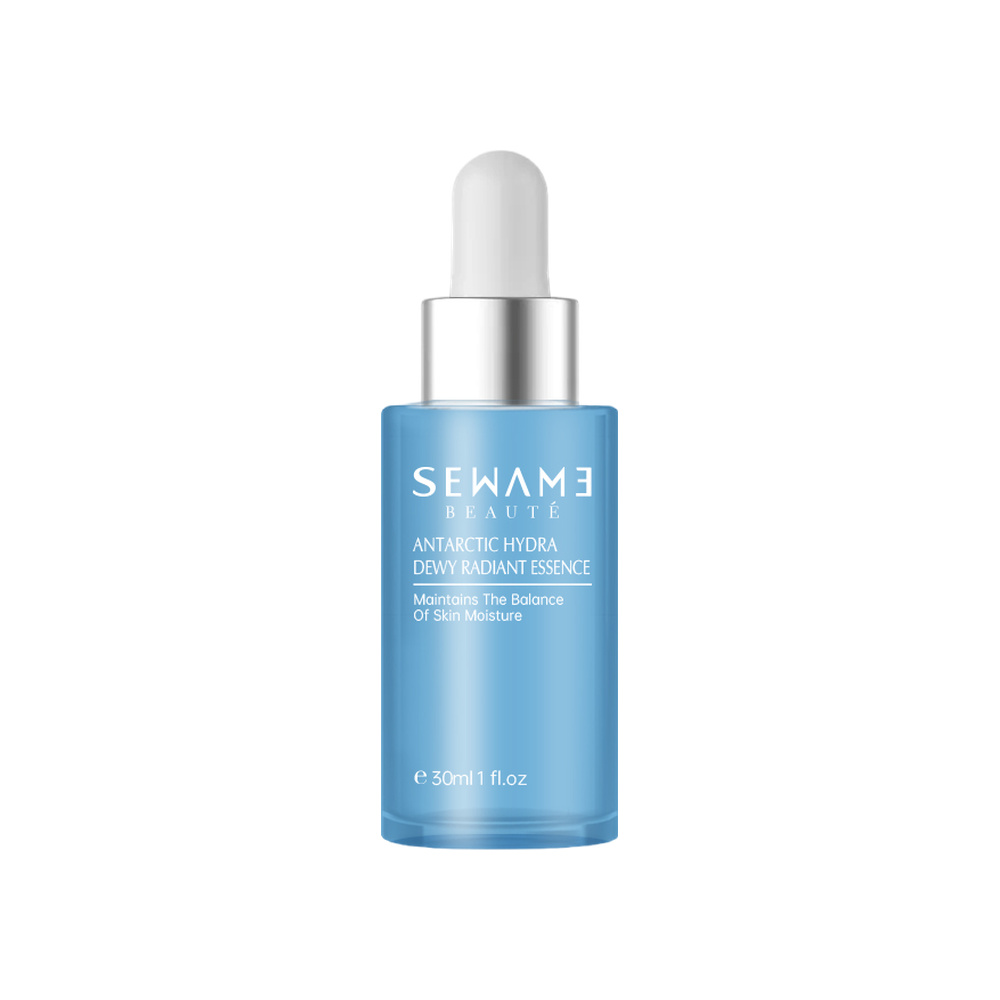
This case illustrates the value of a staged launch: the brand did not commit to large finished-goods inventory upfront. Instead, it used a small-scale trial to validate market response, scheduled production in stages, and scaled the order based on actual business demand. For the manufacturing partner, OEM/ODM collaboration is not only about completing a production order; it is about combining formulation, cost, and market considerations to help the brand build a more rational launch plan.
Recognize the Founder-Level Challenges of Scaling
As the brand grows, the founder's workload can become a constraint. Product development, marketing, customer service, inventory planning, supplier coordination, and financial management all compete for attention. Trying to manage every function without adequate systems or support can slow decisions and increase the likelihood of mistakes.
Avoid hiring without a clear role. Adding people does not automatically reduce the founder's workload. Define the responsibilities, expected outcomes, and decision authority of each role before recruiting. Prioritize the operational bottlenecks that most directly limit the business.
Avoid overordering out of fear. Founders may buy too much inventory because they worry about stockouts or supplier delays. Excess inventory can tie up cash, increase storage costs, and leave the business with products that sell more slowly than expected. Base order quantities on demand evidence, realistic lead times, and a defined safety-stock policy.
Avoid making every decision in isolation. Product and supply-chain decisions often involve trade-offs that are difficult to evaluate without specialist input. Build a reliable network of qualified manufacturing, regulatory, financial, and legal partners. Their roles should be clear, and important decisions should remain supported by written records and evidence.
Founders can also experience periods of uncertainty and isolation as the business grows. A practical operating plan, regular review of financial and sales data, and access to trusted advisors can make the process more manageable. The aim is not to eliminate every risk, but to create a system in which problems can be identified and addressed before they become more expensive.
Choose Partners Who Can Support the Next Stage
A transactional supplier focuses on fulfilling the current order. A development partner should also be able to discuss how product specifications, formula rights, packaging, lead times, and manufacturing capacity will support the next stage of the business.
Gadeting Group's stated experience across more than 1,000 brands, its ready-to-launch formula library, and its manufacturing history can form part of that evaluation. What matters in practice is whether the supplier's capabilities match your requirements, whether commitments are documented, and whether communication remains reliable as the project changes.
After reviewing your first production run, identify the most important next decision. You may need to improve an existing product, increase production, renegotiate component sourcing, change a sales channel, or delay expansion until cash flow is stronger. The right next step depends on the evidence from your own business.
Frequently Asked Questions
Do I own the formula if I use Private Label manufacturing?
Usually, no. In a standard private label arrangement, the manufacturer retains ownership of the base formula, and your brand essentially licenses it. You can often request exclusivity for your specific variation or market, but this must be explicitly negotiated and written into the contract.
How much does it cost to start a skincare brand?
Costs vary widely based on your manufacturing path. A private label route with low MOQs might start with a $5,000 to $15,000 initial investment for a small batch, while a fully custom formulation with high retail packaging standards can exceed $50,000 before marketing begins.
What are typical MOQ (Minimum Order Quantities) for skincare?
Traditional MOQs for custom formulation often range from 3,000 to 10,000 units per SKU. However, using an existing validated formula through private label can sometimes lower the finished product MOQ, though individual packaging components (like custom bottles) may still carry higher minimums.
Do I need FDA approval before launching my skincare product?
In the US, cosmetics do not require pre-market FDA "approval." However, they must be safe, properly labeled, and compliant with the Modernization of Cosmetics Regulation Act (MoCRA), which includes facility registration and product listing. Manufacturers must adhere to GMP standards.

 English
 Français
 Русский язык
 español


