
 lyang_huang@gadetin.com.cn
gadetin@gadetin.com.cn
 +86 136 7623 8313
 +86 153 3806 1804
 09:00 - 18:00
 No.2 Zhenglong 1st street, Dawang National Hi-tech Developmet Zone, Zhaoqing City, Guangdong, China

Private Label vs Contract Manufacturing: Don't let "cheaper and faster" fool you. The short answer is simple: Private Label (PL) means branding an existing factory product; Contract Manufacturing (CM) means the factory builds strictly to your specs. But in the real supply chain, that's where the simplicity ends.
After years on the factory floor, I've seen too many brands lose their custom formulas, get buried by hidden MOQs, or misjudge compliance costs. What actually determines your survival isn't the label on the model—it's who truly owns the IP, how the real costs break down, and who takes the legal fall if things go wrong. This guide cuts through the marketing fluff to give you the exact contracts, calculations, and questions you need before signing.
Quick Conclusion: Decision Cheat Sheet
| Your Situation | Lean PL | Lean CM |
|---|---|---|
| Is the product itself your core competitive advantage? | Brand and channel are the main differentiators | The formulation or design is the moat |
| Do you need a proprietary formulation or specification? | An existing product is sufficient | You need something competitors cannot easily get |
| Can your budget cover upfront investment? | Budget is limited; you want to launch with the first order | You can fund formulation development, testing, and first-run costs |
| Is the category regulated? | PL is possible, but you must build compliance capability | CM is common when custom formulation or efficacy claims are needed, but compliance still needs to be planned |
| Do you need to launch within a few months? | PL is usually faster | CM usually takes longer, especially in regulated categories |
| How much control do you want over the formulation? | You can accept the factory owning the formulation | You need the formulation to be yours, in writing |
This table is only a starting point. Each dimension is unpacked below.
First, Clarify the Concepts: PL, White Label, CM, CMO, and CDMO
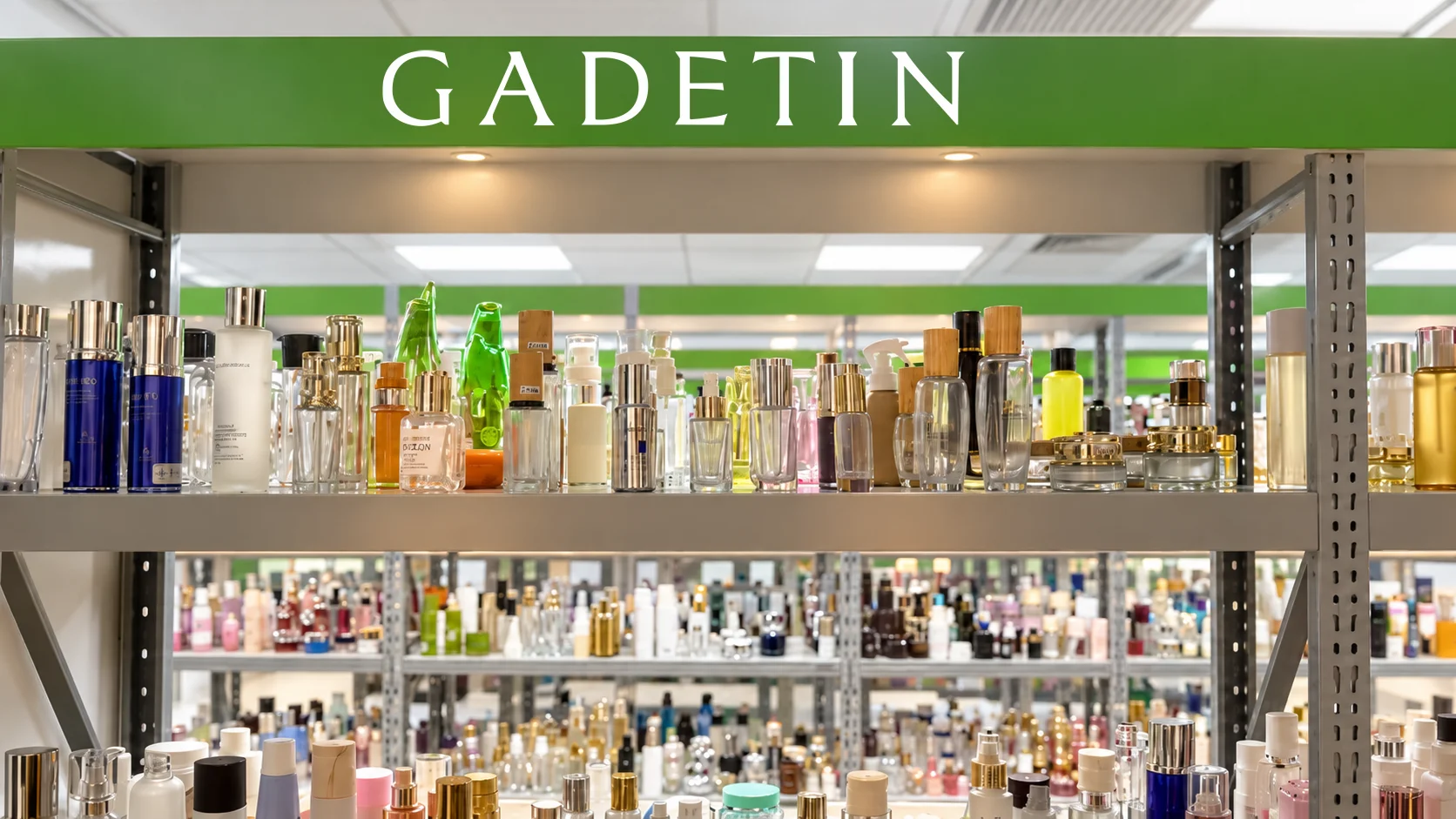
Private Label (PL)
The factory already has a product. The brand selects from existing formulations or designs, applies its own name, packaging, and labels, and may add limited customization such as fragrance, color, or label copy. The factory owns the base formulation and product design, and can sell the same base to other brands. Explore how Gadetin's Private Label solutions can fast-track your brand to market.
White Label
White label is the most generic end of the PL spectrum: the same unmodified product is sold under several brands' labels, with very little ability to change the specification. PL usually allows differentiation at the packaging and appearance level; white label is more homogeneous, and the product itself is not unique to any one brand.
Contract Manufacturing and Co-manufacturing
The essential difference in CM is not factory size or location. It is who owns the specification. You provide the formulation, drawings, or bill of materials, and the factory produces to that specification under a contract that defines who owns the IP. "Co-manufacturing" is used as a synonym for CM in most contexts, but suppliers may use it to describe different levels of collaboration. Before you sign, ask directly: "After this contract ends, who owns the formulation or specification for this product?" The answer will show which model the supplier is actually offering.
CMO and CDMO: Two Kinds of Contract Partner
Suppliers often use "CMO" and "CDMO" as if they meant the same thing, but the difference matters for who does the development work and who keeps the formula.
CMO (Contract Manufacturing Organization) produces the product to a formulation or specification that you provide. Your team, or an independent formulator, does the development. The CMO's job is production, quality control, and packaging.
CDMO (Contract Development and Manufacturing Organization) handles both development and production. It can take you from a concept or rough brief through formulation, testing, and full-scale manufacturing.
Why the distinction matters:
With a CMO, you need to bring a complete, usable specification. The formula is clearly yours if you developed it, but you must hold the documents yourself.
With a CDMO, the formula is often created inside the supplier's lab. Unless the contract says otherwise, the formula may stay with the supplier, which makes exit and transfer harder. Settle ownership in writing before development begins.
Many suppliers describe themselves with both terms. Ask which stages they perform in-house, and which documents you will receive at the end of each stage.
In either case, the brand whose name is on the label keeps its regulatory responsibilities. Choosing a CDMO does not transfer them.
A Middle Path: OEM and Hybrid Models
Not every project fits cleanly into PL or CM. Many manufacturers offer a hybrid, in which the factory starts from one of its existing bases and adjusts it to your requirements. Suppliers use the term OEM for this in different ways, so the label alone tells you little. What matters is how much of the base belongs to the factory and how much you can change.
How a hybrid arrangement usually works
The brand chooses a starting point from the factory's existing formulas or designs, then asks for specific changes: a different level of one active ingredient, a change in texture or scent, a different packaging format, or a modified design. The factory carries out the development needed to make those changes. You avoid building the product from zero, but the result is not fully yours.
Where a hybrid model fits
You want a product that differs from what competitors can buy off the shelf, but do not have the budget or time for full custom development.
You know the one or two changes you want, but do not yet have a complete specification.
You are testing demand and want something more distinctive than a pure private label product, without committing to a full CM project.
The limits to understand
The base formulation usually stays with the factory, which may sell the same base to other brands. Your differentiation rests on the changes you make, so those changes need to be meaningful to your customers. If the factory later offers the modified version to others, what you believed was exclusive may not be.
Contract points that matter in a hybrid deal
Who owns the modified formula, and whether you can take it to another manufacturer if you leave.
Whether the factory may sell the modified version to competitors, and if so, after what period.
What happens if the factory discontinues the base product.
Which changes are included in the quoted price and which are billed separately.
Ask every supplier that offers a hybrid model to state in writing which parts of the product they own and which parts you own. Vague or inconsistent answers are a warning sign.
A Comparison Across Nine Dimensions
| Dimension | Private Label | Contract Manufacturing |
|---|---|---|
| Formulation/Spec Ownership | The factory holds it; you receive the right to sell the product under your brand | Depends on the contract wording; if the contract does not say so, you cannot assume you own it |
| Degree of Customization | Limited: packaging, fragrance, color, label | High: formulation, materials, and process parameters can be customized |
| Minimum Order Quantity (MOQ) | Varies widely; some suppliers have no stated minimum, others require thousands of units | Custom work commonly requires minimums in the thousands of units per SKU |
| Upfront Investment | Generally low, with little or no development cost | Generally higher: formulation development, sampling, testing, and possibly tooling |
| Unit Cost | Can be higher at small volumes; the factory may keep a margin | Can be lower at high volumes, but fixed costs are spread over fewer units at small volumes |
| Time to Market | Generally much shorter | Generally longer, and longer again in regulated categories |
| Quality Control Responsibility | The brand is responsible for auditing and release, but has less control over how the product is made | The brand takes on more responsibility for defining specifications and verifying results; a quality agreement is needed |
| Compliance Responsibility | Labeling, registration, and product liability usually remain with the brand | Same as PL, and the division of responsibilities should be written into the contract |
| Difficulty of Changing Suppliers | Possible, but the formulation cannot be taken with you, so you are effectively redeveloping the product | Harder in general, but a technology-transfer clause can allow the formulation to move with you |
On MOQs: Minimums differ widely by supplier and category. Some private label suppliers have no stated minimum; others require thousands of units per SKU. Custom work commonly starts in the thousands of units per SKU. Packaging and label suppliers set their own minimums, so the effective MOQ can be higher than the formulation minimum. Get a written MOQ from each supplier and ask which minimums stack.
Decision Path and Timeline at a Glance
The first diagram follows the questions most brands should answer in order. The second compares how long each path usually takes, using relative lengths rather than exact figures.
Is the product your core advantage? | |
| No ↓ | Yes ↓ |
Lean PL brand an existing product | Need a fully new formula? |
| Some changes ↓ | Full spec ↓ |
Hybrid / OEM adjust base | Can you fund and wait? |
| No ↓ | Yes ↓ |
Start PL | Lean CM |
The Most Overlooked Issue: Formulation and IP Ownership

This is the most important difference between PL and CM, and the one most easily obscured by the phrase "we are a contract manufacturer."
Under Private Label, What Do You Actually Own?
You typically own your brand name, packaging design, labels, and marketing content. You typically do not own the formulation, process, or base product design. The same product can be sold by the factory to other brands, and you generally cannot stop that. What you pay for is the right to apply your brand to an existing product, not ownership of that product. Check your supply agreement for the exact terms, because they vary.
Contract Manufacturing Clauses That Must Be Written Clearly
If you choose CM, the following clauses should be written into the contract. Do not rely on verbal assurances or general "industry practice." If you want to see how a truly exclusive custom formulation service handles IP ownership, examine their contract structure.
Specification and formulation ownership. If you paid for custom development, the contract should state that you own the formulation, the specification, and the right to transfer them to another manufacturer. Joint development is especially risky: specify whether the formulation is owned solely by the brand or jointly, and whether the factory may use it in other products.
Confidentiality (NDA). The scope should cover formulation, process parameters, supplier lists, and customer information, and the obligation should survive termination of the contract.
Exclusivity. Whether the factory may sell the same or a substantially similar product to your competitors. Without an exclusivity clause, a "custom" product may become a standard product the factory sells to others.
Technology transfer and handover. On termination, the factory should provide formulation documents, batch records, and supplier information, and cooperate with a new manufacturer to reproduce the product.
Discontinuation, insolvency, and breach. Access to formulation documents, batch records, and retained samples if the factory stops operating or goes bankrupt.
Raw material sourcing. Whether you can specify or approve key ingredient suppliers, and whether the factory may substitute ingredients without your consent.
Quality standards and release criteria. Release conditions for each batch, including retained samples, microbiological and heavy-metal testing by an ISO 17025-accredited laboratory, and a certificate of analysis (COA) for each batch.
The practical point is this: contract terms matter more than the label "CM." A lower unit price offers little protection if the contract allows the factory to raise prices after the first order, withhold the formulation on exit, or cap its liability at a small fraction of the batch value.
What Happens When You Change Factories or the Factory Fails
Changing factories for a PL product means redeveloping the product. You keep your brand and packaging design, but not the formulation. The new factory will usually propose a similar product from its own range, and whether consumers notice a difference depends on the category.
Changing factories for a CM product can, in principle, let you take the formulation with you. That requires a technology-transfer clause in the contract and that you have kept complete formulation documents, batch records, and supplier information during the collaboration. Without those, CM status alone does not protect you.
Cost Structure: Looking Beyond the Unit Price
Upfront Cost Checklist
Typical PL upfront items: sample fees, brand and packaging design, label printing, and the first order. PL usually has little or no formulation cost, which is the main reason its upfront investment is lower.
Typical CM upfront items: formulation development fees, sampling iterations, stability and microbiological testing, custom tooling or molds, certification or registration fees, and the first order. Suppliers publish a wide range of prices for these items. Formulation development is often quoted in the low thousands of dollars per formula and can be higher for complex projects. Some suppliers include stability and preservative testing in the development fee; others bill it separately, and individual tests can each cost hundreds to a few thousand dollars at some labs. Custom packaging molds can add a significant one-time cost. Request written quotes that itemize each of these.
Key reminder: PL's lower upfront investment does not mean lower total cost. The factory has already absorbed development costs and recovers them in the unit price, while keeping ownership of the formulation. What you save is upfront cash. What you may pay is a higher long-term unit cost and less ability to differentiate.
Break-Even Calculation
The formula you can apply directly:
Hypothetical example. All numbers below are invented to show the calculation method. They are not quotes for any product or category.
Suppose CM requires $15,000 more upfront than PL for a given SKU. The PL unit cost is $4.50, and the CM unit cost at the required volume is $3.20. The difference is $1.30 per unit.
$15,000 ÷ $1.30 ≈ 11,538 units
In this invented case, you would need to sell roughly 11,500 units to recover the extra upfront investment. If your realistic sales are far below that, the lower CM unit cost does not pay back in the short term. If CM's unit cost is not lower than PL's at your volume, the difference is zero or negative, and the case for CM has to rest on differentiation or IP needs rather than cost.
The value of this model is that it makes the trade-off explicit. It turns "CM is cheaper at volume" into specific questions: how much more upfront, how much saved per unit, and how many units it takes to break even.
Timeline: Stage-by-Stage Comparison from Decision to Launch
Timelines vary widely by category, supplier, and complexity. The stages below are the usual sequence; the durations are indicative only.
PL path: Supplier screening → Sample confirmation → Brand and packaging design → First production run → Launch. Once a supplier is chosen, this path can often move in weeks to a few months.
CM path: Requirements definition → Formulation or design development → Sampling iterations (often several rounds) → Stability and safety testing → Small-batch trial production → Full production → Launch. Custom development is generally longer than PL. One supplier's published timeline for complex custom work is 6 to 12 months, including a three-month accelerated stability cycle.
Stages most likely to cause delays:
Stability and microbiological testing. You cannot run full production until results are in, so test lead times are often the critical path.
Packaging and custom containers. Container suppliers have their own minimums and lead times, which can be longer than the filler's. This applies to PL too.
Number of sampling rounds. The more complex the formulation, the more rounds, and each change to the formulation may require retesting.
Regulated Categories: Who Is Responsible
Category Overview
Dietary supplements, cosmetics (including products with active ingredients), food, medical devices, and pet food are regulated differently in different markets. This section uses the U.S. federal framework as an example. Readers in other markets should follow their local rules.
The Core Principle: Responsibility Follows the Label, Not the Factory
Who is legally responsible is determined by the name on the label and the role defined by the regulation, not by who physically performs production. Outsourcing manufacturing does not transfer that responsibility to the factory. Gadetin's full-service solutions include compliance support to help you navigate this.
Dietary supplements (21 CFR Part 111). Under the Federal Food, Drug, and Cosmetic Act, a dietary supplement is adulterated if it is not made in compliance with the cGMP requirements in 21 CFR Part 111. FDA has repeatedly taken the position, in warning letters to own-label distributors, that a firm which contracts out manufacturing, packaging, or labeling of a product it sells under its own name remains responsible for cGMP compliance, regardless of who performs the operations. In one warning letter, FDA treated an own-label distributor as a manufacturer of the product it released. In practice, this means an own-label brand must qualify each contract manufacturer, which typically includes on-site audits, and must keep its own quality records. Common FDA findings in these letters include missing component specifications, no written quality-control procedures, and failure to keep reserve samples of each lot.
Cosmetics (MoCRA). Under the Modernization of Cosmetics Regulation Act of 2022, the "responsible person" is the manufacturer, packer, or distributor whose name appears on the label. The responsible person must report serious adverse events to FDA within 15 business days of receiving the information, submit a copy of the label with the report, and submit any new medical information received within one year of the initial report within the same window. Responsible persons must also keep records of adverse event reports (generally six years), ensure there is adequate safety substantiation, and list their products with FDA. Because the responsible person is defined by the label, a contract arrangement does not change who holds that role. A contract should specify how complaints and adverse event information move between the parties, and how quickly.
Common Misconceptions About PL
"The factory handles compliance; I just sell" is the most dangerous assumption under PL. Under the dietary supplement framework, the brand that sells the product under its name keeps responsibility for cGMP compliance. Under MoCRA, the responsible person is defined by the label name. Choosing PL reduces the burden of formulation and specification work. It does not reduce the brand's legal responsibility.
Switching from PL to CM: The Transition Path
Signals That It May Be Time to Switch
Three signals are worth attention. First, sales are stable, and you can name a specific change you want, such as a particular formulation or performance parameter, not just "make it better." Second, customer feedback clusters around a formulation or performance issue that the factory's existing product cannot solve. Third, similar PL products are increasingly common, and packaging and claims no longer make your product stand out. The core test is whether you have validated demand and are ready to own a specification rather than rent someone else's.
Operating During the Transition
Running two suppliers in parallel is feasible, but distinguish overlap from confusion. Keep the PL product on the market while the CM formulation completes stability testing and trial production, then switch gradually. Two product versions on the market at once can create problems with labeling, claims, and batch traceability, so plan SKU transition points and how old inventory will sell through in advance.
Confirm with the PL supplier before switching. You generally cannot take the PL formulation, but you may be able to keep packaging design, brand assets, and any specification documents you supplied yourself. Check whether the PL agreement contains non-compete or non-circumvention clauses, which can restrict what you do next as well as what the factory does.
Screening criteria for a new CM supplier. Beyond the usual qualifications, capacity, and references, for a brand moving from PL, check: whether the supplier will put in writing that the formulation belongs to you and include technology-transfer clauses; whether it will use your existing product as a benchmark; whether you can specify key ingredient suppliers; and whether its minimums match your realistic sales volume, rather than requiring inventory you cannot sell through.
Decision Framework: Five Questions and a Scoring Sheet
Answer the following five questions. For each, score 1 point for a PL-leaning answer, 3 points for a CM-leaning answer, and 2 points if you are uncertain or in the middle.
Score guide: 5–8 points lean PL. 9–11 points need more validation before deciding. 12–15 points lean CM. This scoring is a tool designed to turn vague impressions into comparable answers. It is not a validated model, and the thresholds are a judgment call.
1. Is the product itself your core competitive advantage?
PL = 1: Brand, channel, and content are the differentiators. The product is a good entry point.
CM = 3: The formulation or design is the reason customers choose you.
2. Do you have formulation or design knowledge, or can you afford technical support?
PL = 1: You have no internal technical capability and no plan to build or buy it.
CM = 3: You can define specifications, judge technical trade-offs, and discuss them with a factory as an equal.
3. Can your budget cover the upfront investment, and can you wait for launch?
PL = 1: Upfront cash is limited and you need revenue within a few months.
CM = 3: You can fund development, testing, and first-run costs, and accept a longer launch schedule.
4. Is the category regulated, and do you have compliance capability?
PL = 1: The category is lightly regulated, or you already have labeling and registration capability.
CM = 3: The category is regulated and you will make custom formulation or efficacy claims. You can meet your responsibilities as the responsible party, including qualifying the manufacturer and establishing safety substantiation.
5. Are you building a brand or a product?
PL = 1: The brand is the long-term asset, and the product can be chosen from the factory's range.
CM = 3: The product is a core asset, and you need control at the specification level, including the ability to leave the factory.
Five Common Misconceptions
Misconception 1: PL means low quality. Quality depends on the specific factory's qualifications, cGMP status, and your audit. A well-managed PL product can be more consistent than a poorly managed custom product.
Misconception 2: CM is always more competitive. If consumers cannot perceive the formulation difference, CM's upfront cost and higher minimums become a burden rather than a premium. Differentiation has to be recognizable to your target customers.
Misconception 3: Choosing CM means you own the formulation. Ownership comes from contract terms, not from the fact that the product is custom-made. Without IP clauses and technology-transfer obligations, CM status alone gives you nothing when you change factories.
Misconception 4: PL requires no compliance work. A brand that sells a dietary supplement under its own name keeps responsibility for cGMP compliance. Under MoCRA, the brand whose name is on the label is the responsible person. PL reduces formulation work, not legal responsibility.
Misconception 5: You can compare unit prices alone. Ignoring MOQs, upfront investment, lead times, and switching costs overstates the economics of one model. A low unit price tied to a minimum you cannot sell through, or to a formulation you cannot take with you, is not a low total cost.
Conclusion and Checklists
The core logic fits in one sentence: if you are buying a product you can put your brand on, PL is a reasonable starting point. If you need a product that must belong to you, CM is the right model, but only if the contract assigns ownership to you. Compliance responsibility does not disappear because of the model you choose. It changes what you need to manage.
Supplier Audit Checklist
Qualifications and registration status. Request current evidence, not verbal confirmation. Evidence to request: current registration or cGMP documentation.
Capacity and scheduling. Confirm how your MOQ is prioritized in their production plan. Evidence to request: written production schedule and capacity statement.
Testing and certification. Confirm they use an ISO 17025-accredited laboratory and provide a COA for every batch. Evidence to request: sample COA and laboratory accreditation.
References. Ask for verifiable examples in your category, not generic customer logos. Evidence to request: named references you can contact.
Sampling process. Confirm the number of rounds, cost, timeline, and who owns the formulation and specification generated during sampling. Evidence to request: written sampling agreement.
Model. Confirm whether they operate as a CMO, a CDMO, or both, and which stages they perform in-house. Evidence to request: written scope of work for each stage.
Contract Clause Checklist (Bring to Negotiation)
Formulation and specification ownership assigned to you in writing. Your requirement / acceptable version:
Confidentiality covering processes and supplier lists, surviving termination. Your requirement / acceptable version:
Exclusivity and non-compete terms, with scope and duration. Your requirement / acceptable version:
Technology transfer and document delivery on exit. Your requirement / acceptable version:
Handling of discontinuation, insolvency, and breach, including access to records and retained samples. Your requirement / acceptable version:
Key ingredient designation and restrictions on substitution. Your requirement / acceptable version:
Quality standards and per-batch release conditions. Your requirement / acceptable version:
MOQ stated as fixed unit counts, with packaging minimums disclosed. Your requirement / acceptable version:
Lead times with clear production windows and remedies for delay. Your requirement / acceptable version:
Liability cap that covers at least the value of one full production batch. Your requirement / acceptable version:
Break-Even Worksheet: How to Calculate It Yourself
Fill in your own numbers from written quotes. Each step builds on the one before it.
| Step | Item | How to calculate |
|---|---|---|
| A | Extra upfront investment for CM (formulation, testing, tooling, first run) | CM upfront quote minus PL upfront cost |
| B | PL unit cost (written quote) | From the PL quote |
| C | CM unit cost at your realistic volume (written quote) | From the CM quote at the volume you expect to sell |
| D | Per-unit difference | B − C |
| E | Break-even units | A ÷ D (if D is zero or negative, there is no cost-based payback) |
| F | Your realistic annual sales (units) | From your sales forecast |
| G | Months to break even | (E ÷ F) × 12 |
To work out your own numbers, write them on paper or type them into a spreadsheet, following the steps above. The worked example below shows the same calculation with invented numbers.
Worked example (invented numbers): A = 15,000; B = 4.50; C = 3.20; F = 12,000.
D = 4.50 − 3.20 = 1.30
E = 15,000 ÷ 1.30 ≈ 11,538 units
G = (11,538 ÷ 12,000) × 12 ≈ 11.5 months
If D is zero or negative, CM has no cost-based payback. The decision then rests on differentiation or IP needs.
Frequently Asked Questions (FAQ)
What is the difference between white label and private label? +
White label is the most generic form of PL: the same unmodified product is sold under multiple brands' labels, with very little ability to change the specification. PL usually allows some customization at the packaging, fragrance, or label level, but the formulation remains with the factory.
What is the difference between a CMO and a CDMO? +
A CMO produces the product to a formulation or specification you provide. A CDMO handles development as well as production, so it can help create the formula. The practical difference is who holds the formula. If a CDMO develops it in its own lab, you need written terms on ownership and transfer before development begins.
Should a new brand start with PL or CM? +
If you have not yet validated demand and do not have a clear formulation difference, PL is generally the lower-risk way to launch. CM makes more sense once the product has proven demand and you can specify exactly what you want to change.
How do I protect the formulation when choosing CM? +
The contract should state that you own the formulation, the specification, and the right to transfer them to another manufacturer. Confidentiality should cover process parameters and supplier lists. Include technology-transfer and document-delivery obligations for when the relationship ends.
Which is more suitable for supplements or cosmetics? +
If you use the factory's existing formulation and change only the label, PL offers speed and lower upfront cost, but the brand still carries compliance responsibility, including cGMP responsibility for supplements and responsible-person obligations under MoCRA. If you need a proprietary formulation or efficacy claims, CM fits better, but it must be paired with IP clauses and a quality agreement.
How long does it take to change factories? +
Changing factories for PL means selecting a new product and redeveloping your version of it, so the timeline depends on the new supplier's sampling and production schedule. Changing factories for CM can be shorter than starting from scratch if you have complete formulation documents and the old factory cooperates with the transfer. Stability testing and trial production usually cannot be skipped, so the process still takes months.

 English
 Français
 Русский язык
 español


