Please don't hesitate to reach out to us whenever you need assistanco. Well make sure to respond to you promptly.
 lyang_huang@gadetin.com.cn
gadetin@gadetin.com.cn
lyang_huang@gadetin.com.cn
gadetin@gadetin.com.cn +86 136 7623 8313
 +86 153 3806 1804
 09:00 - 18:00
 No.2 Zhenglong 1st street, Dawang National Hi-tech Developmet Zone, Zhaoqing City, Guangdong, China
Most private label beauty launches miss their first-sale window not because the product fails, but because the calendar is built on best-case assumptions. The real slippage comes from component lead times, claim substantiation and certification backlogs — not the formula itself.
Below are the causes buyers underestimate, and a timeline framework to protect your launch date. For the money side, see what drives private label cost; for vetting a partner, see our 12 questions to ask a manufacturer.

1. The Formula Is Rarely the Bottleneck
2. Component Lead Time Is Underestimated
3. Claim Substantiation Slips
4. Certification Backlog
5. Over-Long Customization
6. MOQ Mismatch Causes Overproduction
7. Artwork Revision Loops
8. PIF Not Ready at Launch
9. Cash-Flow Gap
10. Channel Timeline Mismatch
11. No Demand Test Before the Full Run
12. A Realistic Timeline Framework
13. Frequently Asked Questions
Brand owners plan around "development takes 4–8 weeks" and assume the clock starts there. In practice the formula is often ready early; the delay is everything around it.
Airless pumps, custom molds and decorated caps are made by separate suppliers with their own queues. A unique bottle can add 3–6 weeks you never budgeted. Standard packaging is the shortcut.
"Anti-aging" or "brightening" needs support — in-vivo, clinical or at least robust literature. Brands often decide the claim after the formula is locked, then wait weeks for justification.
Halal, ISO 22716 or organic certificates queue behind other clients. If your market needs them at launch (see EU/US/Halal paths), start the file before production, not after.
Tweaking a formula three times feels careful but burns the season. Set a max of two sampling rounds up front and decide.
A too-low MOQ means you can't fill the channel; a too-high MOQ means warehousing cost that eats margin. Size the run to real demand, not the factory's minimum.
Label and carton artwork bounce between brand, designer and regulator. Each loop is a week. Freeze copy before print proofs.
In the EU the Product Information File must exist before you sell. Teams finish the product, then discover the dossier is incomplete — and the launch freezes.
Deposit goes out; first sale is months away. Brands underestimate working capital and stall mid-run. Model the gap early (our cost model helps).
DTC can launch in a week; retail buyers plan seasons ahead. Picking the channel late forces a mismatch nobody planned for.
Skipping a small probe means a full run built on a guess — the costliest miss of all.
· Week 0–2: brief, claim decision, packaging choice (standard first).
· Week 2–6: formula samples (cap at 2 rounds), artwork freeze.
· Week 3–8 in parallel: certifications, PIF/dossier, component PO.
· Week 8–10: production, fill, QC.
· Week 10–12: ship, list, sell.
Build the plan backwards from the sale date, with a 2-week buffer.
Components (custom bottles/pumps) and certifications — not the formula. Order standard packaging and start certificates early.
Plan backwards from first sale, cap formula rounds at two, freeze artwork before proofs, and open the PIF/cert file in parallel with production.
Yes. A low-MOQ probe de-risks the full run and shows real demand before you commit warehouse cash.
At brief stage — the safety assessment alone takes weeks. Treat the PIF as the longest lead item, not a post-production task.
Often. Custom bottles and artwork proofs drag timelines more than the formula. Choose standard packaging to protect the date.
Big. If your slot is behind a larger client, you wait. Book production early and confirm a firm slot in writing.
Yes — but align the campaign to the confirmed ship date, with a buffer. Marketing early builds demand; mistimed ads burn cash.
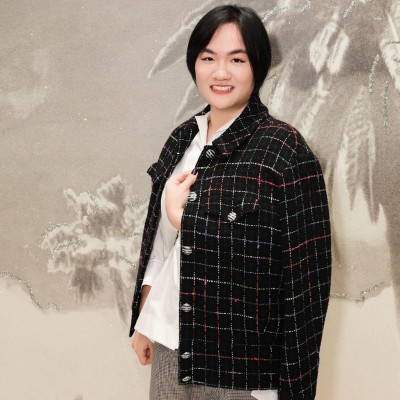
With over 10 years of experience in the beauty and personal care industry, Ying Hong has supported 200+ brands and 6,000+ product developments. Her expertise spans custom formulation, regulatory compliance, and OEM/ODM manufacturing. She shares practical insights to help beauty brands navigate product development and manufacturing.

 English
 Français
 Русский язык
 español


