Please don't hesitate to reach out to us whenever you need assistanco. Well make sure to respond to you promptly.
 lyang_huang@gadetin.com.cn
gadetin@gadetin.com.cn
 +86 136 7623 8313
 +86 153 3806 1804
 09:00 - 18:00
 No.2 Zhenglong 1st street, Dawang National Hi-tech Developmet Zone, Zhaoqing City, Guangdong, China

Choosing the right facial mask manufacturer is an important decision for skincare brands because facial masks combine formulation, material selection, user experience, packaging and manufacturing requirements. A reliable facial mask manufacturer should help brands transform a product concept into a complete skincare solution through formulation development, material selection, production management and quality control. For brands, selecting a supplier is not only about finding a factory that can produce masks. The right partner should understand: Target customers Product positioning Skin concerns Formula requirements Mask format Packaging expectations Commercial production needs Whether a brand plans to launch sheet masks, cream masks, sleeping masks or treatment masks, choosing the right manufacturing partner directly affects product quality and market competitiveness. This guide explains how brands can evaluate facial mask suppliers and build successful private label skincare products. Brands developing facial mask products can review GADETIN's skin care manufacturing solutions when planning product development. Before choosing a manufacturer, brands should understand the main facial mask categories. Different mask formats create different development requirements. A brand should define the product concept before selecting a supplier. A sheet mask manufacturer may focus heavily on: Sheet material Essence loading Packaging sealing A cream mask manufacturer may focus more on: Emulsion structure Texture Sensory experience The best manufacturing partner is not simply the one that produces the most products, but the one that understands the requirements of your specific product category. Many brands approach manufacturers with only a simple idea: We want to create a facial mask. However, successful product development requires a clearer direction. Before contacting suppliers, define: Consider: Age group Skin concerns Lifestyle Purchasing behavior Market region Examples: A premium skincare brand may focus on: Luxury packaging Advanced formulas High-end user experience A daily skincare brand may focus on: Convenience Affordable positioning Simple routines Define whether the mask focuses on: Hydration Brightening positioning Skin conditioning Moisturizing Daily skincare Premium skincare experience Consider: Mass market Professional skincare Premium beauty Natural-inspired skincare Functional skincare A clear product strategy helps the manufacturer recommend suitable development options. Brands usually choose between private label and custom development. Private label is suitable when brands want: Faster launch speed Lower development complexity Reduced initial investment Proven product concepts It allows brands to focus more on: Branding Marketing Sales channels Customer acquisition Custom development is suitable when brands need: Unique product concepts Specific textures Customized ingredients Different user experiences Examples: Premium anti-aging masks Specialized skincare masks Unique sensory experiences Brand-specific formulations Custom facial mask development works best when the product itself is an important part of brand differentiation. A facial mask is not only a piece of material with skincare ingredients. The final product experience depends on multiple elements. Important formulation considerations include: Essence texture Absorption speed Skin feel Fragrance Ingredient compatibility Formula stability Product positioning For example: A hydration-focused sheet mask may require: Lightweight essence Comfortable application Good absorption A premium anti-aging mask may require: Richer formula positioning More advanced ingredient concepts Luxury sensory experience The manufacturer should understand how formula decisions influence the final consumer experience. Sheet masks are one of the most common facial mask formats. However, successful sheet mask development involves more than selecting an essence. Important factors include: Common considerations: Softness Skin contact experience Essence retention Application comfort Brands should evaluate: Texture Absorption Residue Fragrance Skin feel Sheet masks require effective packaging because the package needs to maintain: Product freshness Essence containment User convenience A professional sheet mask OEM manufacturer should understand how these elements work together. Cream masks have different development requirements. Important factors include: Consumers often evaluate: Smoothness Spreadability Richness Application experience The manufacturer needs to balance: Stability Skin feel Product appearance Packaging compatibility A cream mask should match the intended routine. For example: A luxury overnight mask may require a richer experience. A daily-use mask may need lighter application. Choosing a supplier requires looking beyond product catalogs. Ask: Does the manufacturer understand different mask formats? Can they support private label and custom projects? Can they recommend suitable product directions? Evaluate: Formula development Sample adjustment process Technical communication Product optimization ability Consider: Manufacturing consistency Production capacity Packaging support Quality procedures Good suppliers should clearly explain: Development stages Sample feedback process Production requirements Project timeline GADETIN provides skincare product development and manufacturing support through its skin care category. A professional development process usually includes several stages. The brand provides: Product concept Target customer Desired benefits Texture preference Packaging direction Market positioning The manufacturer evaluates: Formula direction Mask type Material options Packaging requirements Brands review: Appearance Texture Application feel Fragrance Overall experience Feedback should be specific. Instead of: Make it more premium. Provide details: Improve the softness of application and create a smoother skin feel after use. After adjustments: Formula is confirmed Packaging is finalized Production requirements are documented The approved product moves into manufacturing. Production involves: Material preparation Formula processing Filling Packaging Quality inspection A capable facial mask manufacturer should connect product development with reliable commercial production. When comparing suppliers, evaluate multiple factors. Price should be considered together with overall supplier capability. A lower quotation may not include: Development support Packaging assistance Quality management Technical communication For sheet masks, material strongly influences user experience. A manufacturer needs clear direction to create suitable samples. Starting with fewer products can make: Marketing clearer Inventory easier Brand positioning stronger A supplier that can support future skincare categories may provide more long-term value. Brands can improve efficiency by: Clear requirements reduce unnecessary revisions. Choose sheet mask, cream mask or other formats based on customer needs. Evaluate the complete user experience. Formula and packaging should work together. A supplier should support more than production. It should help solve product-development challenges. Many brands start with one hero product. Later expansion may include: Hydrating mask Anti-aging mask Brightening mask Sleeping mask Eye care products Complete skincare sets A manufacturer with broader skincare capability can help brands maintain consistency across products. GADETIN's skincare solutions provide a reference point for brands planning broader product development. GADETIN supports skincare brands through product development and manufacturing solutions. For companies evaluating facial mask suppliers, the key considerations include: Product concept support Formula development Manufacturing capability Quality management Long-term cooperation potential Brands can explore the wider GADETIN manufacturing platform when evaluating skincare OEM cooperation. Choosing the right facial mask manufacturer requires evaluating more than production capability. Brands should consider: Product category experience Formula development ability Customization options Sheet material knowledge Packaging support Manufacturing quality Communication process A strong facial mask supplier should help brands move from product ideas to commercially successful skincare products through structured development and reliable manufacturing. The right partner helps transform a skincare concept into a product that customers can understand, use and trust. Evaluate the manufacturer's product experience, R&D capability, customization options, production quality and communication process. A sheet mask OEM manufacturer develops and produces sheet mask products for brands according to agreed formulas, materials, packaging and production requirements. Yes. Many manufacturers provide private label facial mask solutions using existing formulas with branding and customization options. Sheet masks use pre-soaked materials, while cream masks use direct-application formulas. They require different development and manufacturing approaches. The timeline depends on customization level, formula complexity, sample revisions, packaging requirements and production planning. Brands should prepare product concept, target customers, desired benefits, packaging direction, market positioning and customization requirements.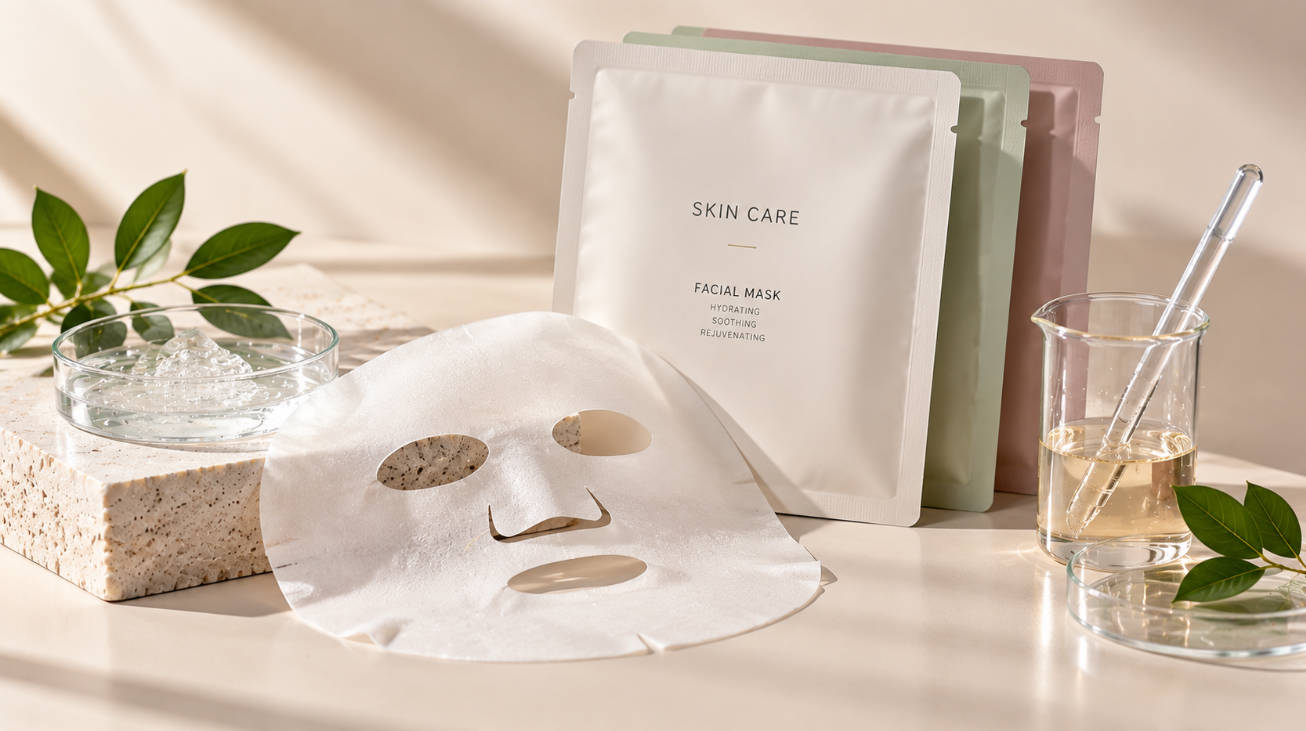
Understand Different Types of Facial Mask Products
Define Your Facial Mask Product Strategy First
Target Customer
Product Purpose
Brand Positioning
Private Label Face Mask vs Custom Facial Mask Development
Private Label Face Mask
Custom Facial Mask Development
Evaluate Facial Mask Formula Development Capability
Sheet Mask Manufacturing Considerations
Sheet Material
Essence Formula
Packaging
Cream Mask Development Considerations
Texture
Formula Structure
User Experience
How Brands Should Evaluate a Facial Mask Manufacturer
1. Product Development Experience
2. R&D Capability
3. Production Capability
4. Communication Process
Understand the Facial Mask Development Process
Step 1: Product Brief
Step 2: Formula and Material Selection
Step 3: Sample Development
Step 4: Final Approval
Step 5: Commercial Production
Compare Facial Mask Suppliers Using These Criteria
Common Mistakes When Choosing a Facial Mask Supplier
Choosing Only Based on Price
Ignoring Material Selection
Requesting Customization Without Clear Requirements
Launching Too Many Products
Ignoring Future Expansion
How to Reduce Facial Mask Development Risks
Creating a Detailed Product Brief
Selecting the Right Product Format
Testing Samples Carefully
Planning Packaging Early
Choosing a Manufacturer With Development Capability
Building a Facial Mask Product Line
How GADETIN Supports Facial Mask Product Development
Conclusion
FAQ
How do I choose a facial mask manufacturer?
What is a sheet mask OEM manufacturer?
Can facial mask manufacturers create private label products?
What is the difference between sheet masks and cream masks?
How long does facial mask product development take?
What should brands prepare before contacting a facial mask supplier?

With over 10 years of experience in the beauty and personal care industry, Ying Hong has supported 200+ brands and 6,000+ product developments. Her expertise spans custom formulation, regulatory compliance, and OEM/ODM manufacturing. She shares practical insights to help beauty brands navigate product development and manufacturing.

 English
 Français
 Русский язык
 español


