Please don't hesitate to reach out to us whenever you need assistanco. Well make sure to respond to you promptly.
 lyang_huang@gadetin.com.cn
gadetin@gadetin.com.cn
lyang_huang@gadetin.com.cn
gadetin@gadetin.com.cn +86 136 7623 8313
 +86 153 3806 1804
 09:00 - 18:00
 No.2 Zhenglong 1st street, Dawang National Hi-tech Developmet Zone, Zhaoqing City, Guangdong, China
OEM (Original Equipment Manufacturer) and ODM (Original Design Manufacturer) describe who designs your cosmetic product. In OEM you supply the formula or a detailed spec and the factory only manufactures it; in ODM the factory designs the formula, packaging and often the concept, and you apply your brand. The practical stakes are ownership and speed: OEM gives tighter formula control but a slower, costlier launch; ODM — including private label — launches in weeks at lower cost, but the base may be shared with other brands. Choose OEM when you already hold a defensible formula; choose ODM/private label to test demand fast.
The costly mistakes come from treating these as fixed boxes. Below we unpack who really owns the formula and tooling, the hidden fees behind "faster," the white-label competition trap, and a decision matrix by brand stage. If you are weighing a Chinese OEM/ODM partner, our team can quote both routes and flag the contract clauses that protect you — send your product idea and target market for a free, no-obligation quote.

1. OEM vs ODM in One Sentence
2. Who Owns the Formula, the Mold and the Rebrand Rights
3. The Real Cost Gap: Sampling Fees, Mold Costs and MOQ Traps
4. White-Label Risk: When the Same ODM Base Sells Under Three Brands
5. Where Private Label and Custom Formulation Fit on the Spectrum
6. A Decision Matrix by Brand Stage
7. Why a Dual-Mode Supplier Beats Switching Later
8. Red Flags in an "OEM or ODM" Sales Pitch
9. FAQ
OEM means you design, the factory builds. ODM means the factory designs, you brand. That single line hides most of the real decisions a buyer faces — because "who designs" decides who owns the IP, who carries the development cost, and how fast you reach shelf.
Most first-time buyers assume ODM is just "the cheap version of OEM." It is not. ODM is a different risk profile: you trade formula exclusivity for speed and low entry cost. Private label — the route most B2B buyers start with — is simply ODM where the factory already has a proven base ready to rebrand.
This is where the labels stop meaning what the brochure says.
· Formula ownership. In OEM, you own the spec you bring; the factory should not reuse it without permission. In ODM, the factory owns the base formula and licenses it to you — sometimes exclusively, often non-exclusively across many brands.
· Tooling and molds. Custom bottle molds, pumps or cartons are usually paid for by you (a one-time tooling fee) and stored at the factory. Confirm in writing who holds the mold and whether the factory may use "your" mold for another client.
· Rebrand rights. A true ODM base can typically be relaunched by the factory under a different brand unless you negotiate exclusivity for a region, category or period. That negotiation is the difference between "my product" and "a product I share."
A capable partner will put formula license scope, mold custody and rebrand restrictions in the contract — not just in the sales call. For the questions to pin down, see our top 12 questions to ask a private label manufacturer in China.
"ODM is cheaper" is only true on the surface. The full cost picture has three layers buyers miss:
Cost layer | OEM | ODM / private label |
Development | Your R&D or paid custom dev | Included in factory's base |
Sampling & testing | You fund stability/safety tests | Often bundled, but reformulation costs extra |
Tooling | Mold fees if you customize packaging | Stock packaging = no mold fee |
MOQ pressure | Lower if using stock pack | Low entry MOQ, but price breaks at volume |
The trap: a low unit price can be wiped out by a high MOQ that forces you to stock more than you can sell, or by mold and sampling fees buried in the quote. Always ask for the all-in landed cost at your realistic order quantity, not the headline per-unit price. For what actually moves your price beyond MOQ, see our breakdown of what really drives private label cosmetics cost.
Private label sits at the fast end of ODM, and that is exactly where the white-label trap lives. The factory's "best-selling serum base" can appear under three competing brands on the same marketplace — same texture, same claims, different label.
This is acceptable for commodity items (a basic cleanser, a gentle body wash) where price and distribution win. It is dangerous when your entire brand promise rests on one "signature" product that a competitor also sells. If differentiation is your strategy, ODM alone will not protect it — you need either an exclusivity clause or a move toward custom formulation.
The honest middle path: start ODM to prove demand, then ask the factory to develop a unique version of the winning base once sales confirm it. You keep speed early and exclusivity later without switching partners.
OEM, ODM, private label and custom formulation are not four separate boxes — they sit on one spectrum from "factory-designed" to "you-designed":
· Private label = ODM with a ready base. Fastest, lowest MOQ, lowest differentiation.
· ODM (custom base) = factory designs a base around your brief, but the factory still owns the underlying know-how.
· Custom formulation = you brief a unique formula; the factory develops it to your spec. Closer to OEM control, but the factory runs the lab work.
· OEM = you hand over a finished formula or spec; factory only produces.
Most brands start at private label (ODM) and graduate rightward as demand proves. The mistake is jumping to the far right too early and burning months on an unproven idea. For the private-label-versus-custom decision specifically, see our private label vs custom formulation guide.
Use this to pick the model that matches where you actually are — not where you wish you were.
Your stage | Best model | Why |
Pre-launch, no formula, testing demand | Private label (ODM) | Weeks to market, low cash tied up |
Holding a proven formula, need capacity | OEM | You keep control, factory scales it |
Selling well, need a defensible hero SKU | Custom formulation | Exclusivity and IP protect margin |
Entering a regulated market fast | ODM with certs in place | Compliance files already exist |
Want one partner for the whole path | Dual-mode OEM/ODM | Graduate PL → custom without replatforming |
The pattern: move rightward only after the previous stage is proven. Speed early, exclusivity later.
Brands often pick the cheapest ODM for launch, then discover their "unique" idea needs custom work the original factory cannot do — and switching partners means re-qualifying, new tooling and a compliance restart.
A dual-mode OEM/ODM supplier removes that cliff. You validate with a private label base, then hand the same account manager a custom brief and develop the hero SKU in-house. The factory already holds your stability data, your market certs and your packaging specs, so the upgrade is measured in weeks, not quarters. For the full category view, see our private label personal care hub.
1. "Everything is exclusive" — with no written license scope, the base is almost certainly shared.
2. No mold custody clause — your paid tooling can be reused for another client.
3. Quote hides sampling and testing fees — you discover them after sign-off.
4. Vague cert claims — "FDA approved factory" is not the same as holding the file your market requires.
5. Pushes OEM when you have no formula — a sign they are selling capacity, not fit.
1. Is private label OEM or ODM?
Private label is a form of ODM — the factory designs the base and you brand it. OEM would mean you supplied the formula yourself.
2. Which is faster, OEM or ODM?
ODM (including private label) is faster, because the formula and compliance files already exist. OEM adds your development and the factory's build time.
3. Does OEM give me full formula ownership?
You own the spec you supply. Protect it with a written NDA and a clause forbidding reuse, or a factory can still run your formula for others.
4. Can one factory do both OEM and ODM?
Yes. A full-service OEM/ODM partner can build your spec and also offer private label bases — which is what lets you graduate from PL to custom without switching.
5. Which model is best for a first launch?
ODM / private label — fastest and lowest risk. Move to custom formulation once demand is proven and you need a defensible product.
6. Do I still need certifications with ODM?
Yes. Even with a proven base, confirm the factory supplies the compliance files your target market requires (EU PIF, U.S. FDA alignment, Halal, etc.).
7. How do I keep my formula protected if I switch factories?
Keep the signed IP-assignment clause and the compliance dossier (PIF/CPSR), and do not share the full spec with a new builder until an NDA is in place. The dossier, not just the formula, travels with your brand.
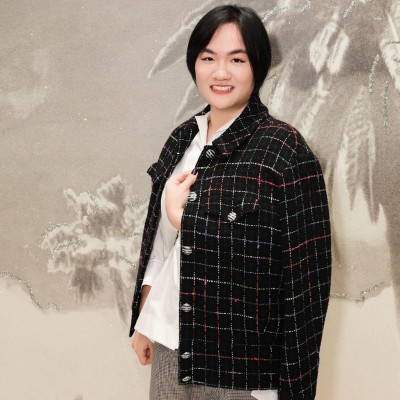
With over 10 years of experience in the beauty and personal care industry, Ying Hong has supported 200+ brands and 6,000+ product developments. Her expertise spans custom formulation, regulatory compliance, and OEM/ODM manufacturing. She shares practical insights to help beauty brands navigate product development and manufacturing.

 English
 Français
 Русский язык
 español


