Please don't hesitate to reach out to us whenever you need assistanco. Well make sure to respond to you promptly.
 lyang_huang@gadetin.com.cn
gadetin@gadetin.com.cn
lyang_huang@gadetin.com.cn
gadetin@gadetin.com.cn +86 136 7623 8313
 +86 153 3806 1804
 09:00 - 18:00
 No.2 Zhenglong 1st street, Dawang National Hi-tech Developmet Zone, Zhaoqing City, Guangdong, China
Signing with a private label manufacturer in China without the right questions is the fastest way to lose a formula, miss a launch or fail customs. The 12 questions below cover the items that actually decide whether a factory is safe to build a brand with — ownership, minimums, timing, proof of compliance and what happens if something goes wrong.
Use this as your pre-signing checklist, then compare answers against our private label hub. For the build model behind the brief, see OEM vs ODM; for market compliance, see EU / US / Halal.

1. Quick-Check Table: 12 Questions at a Glance
2. Who Owns the Formula After the Run?
3. What Is the True MOQ per SKU?
4. What Is the Reorder Minimum and Cadence?
5. What Is the Realistic Lead Time (Not Best Case)?
6. Which Certifications Do You Hold?
7. Can You Build the PIF / Dossier?
8. Who Holds the Recipe If I Leave?
9. Show the Full Price Breakdown (RSP)
10. How Many Sampling Rounds, and at What Cost?
11. What Are Your Fill Lines and Capacity?
12. What Is Your Recall and QA Protocol?
13. Can You Share References and Export Experience?
14. Frequently Asked Questions
Before the detail, here is the whole list on one page. Scan it, then read any section you need. Every row maps to a full section below with the good answer and the red flag to watch for.
# | Question | What to confirm | Red flag |
1 | Formula ownership after the run | Signed IP-assignment or exclusive regional clause; full spec handed over | "Don't worry" with nothing in writing |
2 | True MOQ per SKU | Per-SKU table: first-run vs reorder, with and without custom parts | One number that changes once you pick a cap |
3 | Reorder minimum and cadence | Reorder near first-run minimum, flexible timing | Reorder several times the first run |
4 | Realistic lead time | Date range with component and approval drivers called out | A single best-case number |
5 | Held certifications | Original certificates matched to your markets | Screenshot or expired certificate |
6 | PIF / dossier build | In-house PIF + CPNP and a named responsible person | "We'll introduce you to someone" |
7 | Recipe if you leave | Full handover of spec and dossier on contract end | Vague "we'll sort it out later" |
8 | Full price breakdown | Line-item quote you can challenge per line | One lump sum you cannot pull apart |
9 | Sampling rounds and cost | Stated included rounds with clear approval criteria | "As many as you need" (timeline trap) |
10 | Fill lines and capacity | Line list with speeds and honest current load | Reluctance to state plant utilization |
11 | Recall and QA protocol | Batch traceability and a written recall procedure | "We've never had a problem" |
12 | References and export | Named brands in your target market | Only domestic experience for an export brief |
This is the question that protects your brand. Without a written clause, a factory can relabel the same formula for your competitor the next month — and you paid to develop it. "We developed it for you" is not protection; a signed IP-assignment or exclusive-license clause is. Clarify whether you receive the full specification (INCI list, phase order, process parameters) or only a finished-goods relationship, and whether exclusivity is worldwide or regional.
· Good answer: a contract naming you as owner or exclusive regional licensee, with the full spec handed over on final payment.
· Red flag: "don't worry, we won't sell it to anyone" with nothing in writing.
MOQ is usually quoted per order, but your real constraint is per SKU. A "10,000-unit minimum" split across 5 SKUs is 2,000 each — often above what a new brand can actually move before the next reorder. Ask the per-SKU minimum for both stock packaging and any custom component, and the reorder minimum after the first run. A low headline MOQ on a stock bottle can balloon the moment a custom pump or mold enters the brief, so pin down both numbers before you commit.
· Good answer: a clear per-SKU table showing first-run vs reorder minimum, with and without custom parts.
· Red flag: a single round number that quietly changes once you pick a cap you like.
A partner who demands a huge reorder traps your cash in inventory you haven't sold. Smooth, smaller reorders protect margin and let you follow demand instead of forecasting it. Ask the minimum reorder quantity, the shortest interval they will accept between orders, and whether they hold raw-material reserves for you between runs. For a launch brand, a factory that supports 3,000–5,000-unit reorders every 6–8 weeks is far safer than one that wants 20,000 every quarter.
· Good answer: reorder minimum close to your first-run minimum, with flexible timing.
· Red flag: reorder minimum several times your first run, forcing bulk stock.
Every factory quotes the sunny scenario. Ask for the realistic lead time that includes custom components, artwork approval and a buffer for raw-material shortages — and ask what has actually shipped in the last three months. A "4 weeks" claim becomes 10 once a unique pump or a delayed active enters the build; know which number is real before you print a launch date. Build your timeline from the worst credible case, not the sales pitch.
· Good answer: a date range with the drivers (components, approvals, testing) called out.
· Red flag: one fixed number with no mention of what could push it out.
Certificates, not claims, are what get you through customs and onto shelves. The ones that matter depend on your market: ISO 22716 / GMPC for baseline GMP, Halal for the Middle East and Southeast Asia, and FDA-aligned registration for the US. Ask for the original document, not a screenshot, and check the issuer. Our EU / US / Halal breakdown shows which certificate opens which door.
· Good answer: original certificates sent without pushback, matched to your target markets.
· Red flag: "we are certified" with no document, or a certificate that expired last year.
For the EU you need a Product Information File (PIF) and a CPNP notification before sale; for the US, MoCRA registration and listing. A factory that prepares these in-house removes your biggest timeline risk and your steepest learning curve. Confirm they build it themselves — not a third party you have to find and manage — and that the safety assessment is done by a qualified person. If you sell to Europe, this question is not optional.
· Good answer: in-house PIF / CPNP and a named responsible person, delivered with the batch.
· Red flag: "we can introduce you to someone" — that someone is now your problem.
If you ever exit, get acquired, or switch factories, can you take the formula with you? Some factories lock the spec so tightly that walking away means starting the development from zero. Put ownership and handover terms in the contract: what you receive, in what format, and on what trigger (final payment, contract end). The dossier, not just the formula, should travel with your brand.
· Good answer: full handover of spec and dossier on contract end, defined in writing.
· Red flag: vague "we'll sort it out later" with no clause.
Request a line-item quote, not a single unit price: raw materials, labor, filling, packaging, decoration, certificates, QA and freight, each on its own line. Hidden costs almost always surface in the lines buyers don't ask about — decoration and certs are the usual surprises. A transparent breakdown also lets you see exactly where to save: swap the custom cap, drop one print pass, and the number moves.
· Good answer: a per-unit breakdown you can challenge line by line.
· Red flag: one lump sum you cannot pull apart.
Sampling is where timelines quietly die. Unlimited "free" samples rarely stay free, and each round costs calendar time you can't get back. Cap the rounds up front (typically 2–3), agree which rounds are free and which are charged, and define what "approved" looks like so you don't loop forever. Treat sampling as a fixed budget, not an open tap.
· Good answer: a stated number of included rounds with clear approval criteria.
· Red flag: "as many as you need" — that is how launches slip by months.
Matching your volume to their line tells you whether you'll be a priority client or filler. Ask the formats they run (tubes, airless, jars, sachets), the speed of each line, and their current load. A factory running at 90% capacity will push your order back the moment a bigger client calls; one with headroom ships on time. Capacity also signals whether they can grow with you.
· Good answer: line list with speeds and honest current utilization.
· Red flag: reluctance to say how full the plant is.
A serious factory has batch-level traceability and a written recall procedure — because a bad batch is a when, not an if. Ask how they trace a lot, how fast they can pull records, and what their microbial and stability testing covers. If they blink at the question, walk. QA is the cost you pay to never appear in a recall notice.
· Good answer: batch traceability, documented recall steps, routine challenge testing.
· Red flag: no written procedure, or "we've never had a problem."
Export experience means they know the paperwork, not just the product. Ask for brands they have shipped to your target market and proof of clean customs entries. A factory that has filled EU or US orders understands the dossier, the labeling rules and the freight Incoterms — and that saves you from expensive first-timer mistakes. References also confirm they treat clients' IP seriously.
· Good answer: named brands in your market and a track record of compliant exports.
· Red flag: no references, or only domestic experience for an export brief.
Yes, with vetting. The 12 questions above filter real partners from shortcuts — certificates, references and a written IP clause are non-negotiable. A serious Guangdong OEM/ODM with export history is a safe build base; a workshop that can't show papers is not.
Formula ownership and exclusivity in writing. Everything else you can renegotiate after launch; this you cannot undo once a competitor is selling your product.
If you sell to the EU, yes — the PIF and CPNP notification are mandatory before sale. A factory that prepares them in-house removes your biggest timeline risk. See our EU / US / Halal guide.
Start where you can test demand — often 3,000–5,000 units on stock packaging. A custom mold raises MOQ well above 20,000, so delay it until a hero product proves out. Keep the reorder minimum close to the first run.
Yes, both. The NDA stops the factory reusing your brief; the IP clause states who owns the formula and the dossier. Without them, assume it is not protected.
Ask for the original ISO 22716 / GMPC and any Halal or FDA-aligned documents, then cross-check the issuer's registry. A serious partner sends them without pushback; a hesitant one is a red flag.
The best can — which lets you start private label and graduate to custom formulation without switching partners. See OEM vs ODM for how the models differ.
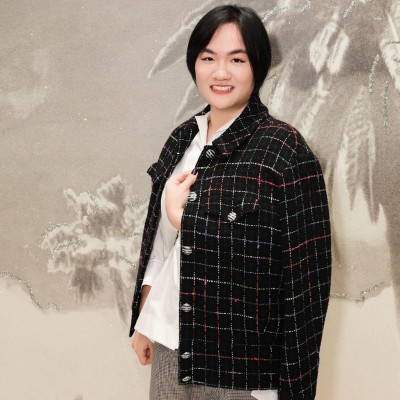
With over 10 years of experience in the beauty and personal care industry, Ying Hong has supported 200+ brands and 6,000+ product developments. Her expertise spans custom formulation, regulatory compliance, and OEM/ODM manufacturing. She shares practical insights to help beauty brands navigate product development and manufacturing.

 English
 Français
 Русский язык
 español


